
Charles Darwin, the famous naturalist, suffered debilitating, relapsing illness for most of his adult life. Early symptoms of this illness were present even when he was a student and were evident before his famous voyage on HMS Beagle. His persistent seasickness throughout the voyage was part of this illness.
Darwin (1809-1882) had numerous, quite diverse symptoms. Nausea, retching, vomiting, and flatulence were prominent. He had episodes of intense lethargy, headaches with visual disturbances, palpitations, eczema of face and hands, sudden swelling and erythema (redness) of his face, episodes of intense fear, episodic severe abdominal pain, memory loss and hysterical weeping.
Added to all of this, he had heat and cold intolerance, numbness and tingling of his fingers.
Proposed diagnoses for this illness date back to Darwin’s lifetime and are even more numerous than were his symptoms.
‘Aggravated dyspepsia’ and ‘suppressed gout’ are no longer recognised disorders. Illnesses related to the voyage, such as Chagas’ disease, brucellosis and malaria may be dismissed, as may illness as a sequel to the seasickness – Darwin had symptoms before he sailed.
Numerous psychological, psychogenic, even psychiatric disorders have been proposed.
Darwin certainly had psychological symptoms but his was not a primary mental disorder. Various intestinal complaints have also been proposed. These may account for intestinal symptoms but not for the entire breadth of the illness.
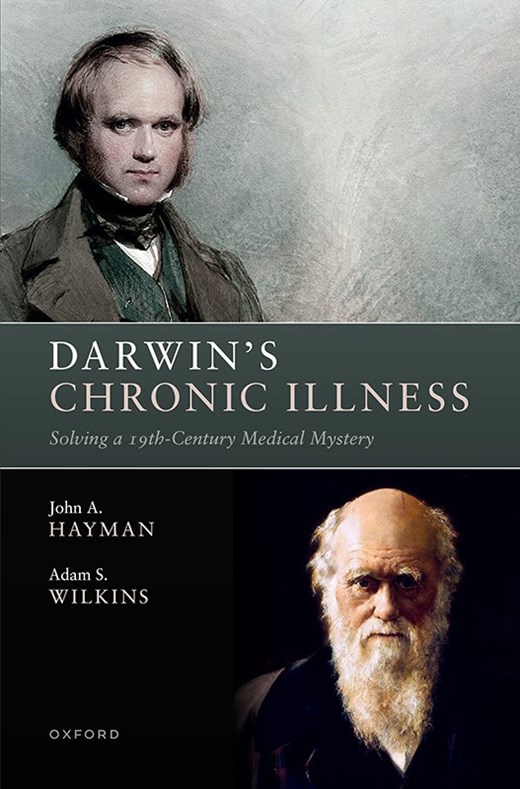
The nature of Charles Darwin’s illness is explored more thoroughly in a book by two authors – myself and Adam Wilkins. The book, entitled Darwin’s Chronic Illness: Solving a 19th-Century Medical Mystery, has been published by Oxford University Press.
In the book, we present Darwin’s illness in more detail, examine the previous diagnoses and explain them as being inadequate or simply wrong.
All in all, more than 40 different, very differing diagnoses have been proposed. What has not been considered by all these diagnosticians is the family history, particularly the maternal family history. It is this family history which may be the clue to the real nature of Darwin’s illness.
Erasmus, Charles’ elder brother (1804- 1881), suffered with lethargy and abdominal pains. He qualified in medicine but never practiced.
Their mother, Susanne (Wedgwood) (1765- 1817) was famously “never quite well and never very ill”. She died when Charles was aged eight.
A younger brother of Susanne, Tom Wedgwood (1771-1805), had an illness similar to that of his famous nephew. He had severe headaches, abdominal pain and suffered with severe seasickness on a voyage to the West Indies.
The youngest sibling of that generation, Mary Ann (1778- 1786), was born physically and mentally retarded, suffered fits and had episodes of cortical blindness, dying at the age of eight. Her symptoms and life history are typical of MELAS, a well-recognised mitochondrial disorder.
The mother of that generation, Sarah Wedgwood (1734- 1815), was married to the founder of the Wedgwood pottery dynasty, Josiah I. She had five other children – four with chronic complaints and a son who died in infancy. She herself suffered with severe arthritis.
It is probable that Sarah was the carrier of a disorder carried down two, even three, generations.
The diagnosis favoured for Charles Darwin’s illness is that of a mitochondrial disorder due to the inheritance of a pathological mitochondrial DNA (mtDNA) mutation of the MELAS type.
Mitochondria are cell organelles which contain DNA, mtDNA. Among animalia, they are unique in this regard. They produce the energy necessary for cell function as well as having cell regulatory activity. Individual cells contain several hundred to several thousand mitochondria depending on the cell functional requirements.
All of our mitochondria are inherited from our mothers; the human ovum contains several hundred thousand mitochondria. The few mitochondria present in sperm do not survive in the developing embryo. As a consequence, mtDNA disorders, unless arising spontaneously, are maternally inherited.
Clinical features of MtDNA disorders are unlike those occurring from nuclear DNA mutations. Nuclear DNA, contained in chromosomes, is replicated and flows equally to daughter cells when a cell divides. Mitochondria flow randomly into daughter cells. If mitochondria with mutant DNA are present, the daughter cells may receive unequal amounts of these impaired mitochondria.
Symptoms relate not to the actual mutation but to the proportion of defective mitochondria present within cells. Children born to the same mother, inheriting the same mtDNA, may vary considerably in their symptomatology. This is seen in the Wedgwood family tree, with Sarah having one spontaneous abortion, Susanna chronically unwell, Tom having severe headaches from childhood, and Mary Ann having all the features of severe mitochondrial disease.
In Darwin’s Chronic Illness: Solving a 19th-Century Medical Mystery, basic mitochondrial function, cell replication and genetics are given, and shown to provide, a plausible explanation for all of Darwin’s symptoms.
Darwin’s illness is relevant to today’s medicine. Patients suffering from similar disorders are misdiagnosed, misunderstood and mistreated. Darwin, therefore, can still contribute to our understanding of life and illness today.
Published 4 October 2026.
If you wish to republish this original article, please attribute to Rationale. Click here to find out more about republishing under Creative Commons.
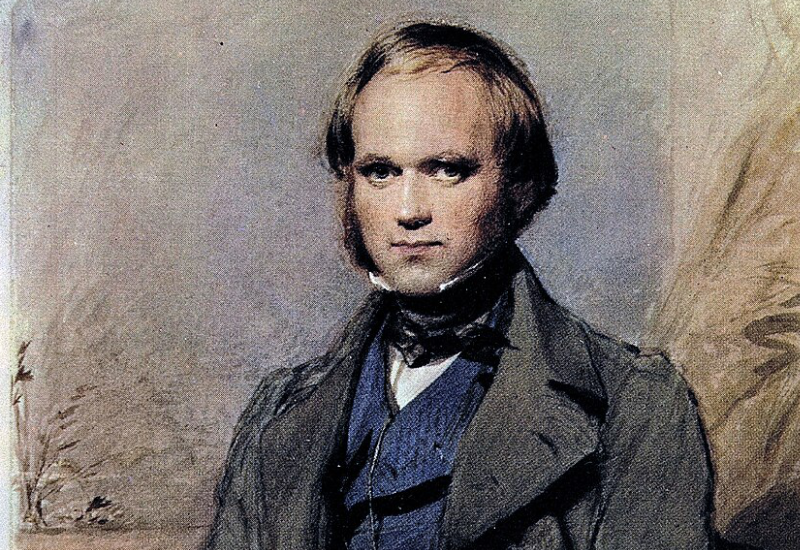
Image: Portrait of Charles Darwin, by George Richmond (WikiCommons)