
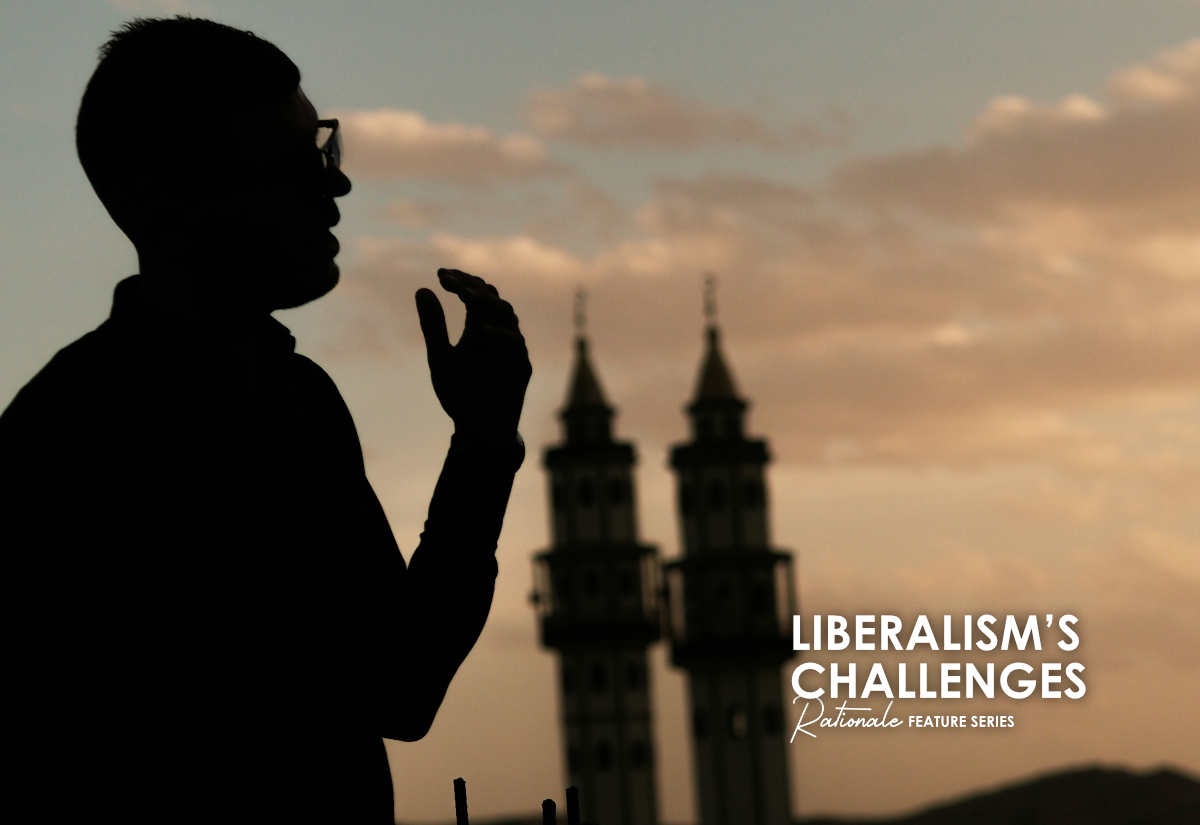
This article is part of a feature series, ‘Liberalism’s challenges’, reflecting on Waleed Aly’s Quarterly Essay, ‘Time of Monsters: What Future For Liberalism?’, and the state of liberal democracy more broadly. If you would like to contribute to the feature series with an article or respond with a Letter to the Editor, find out how to here.
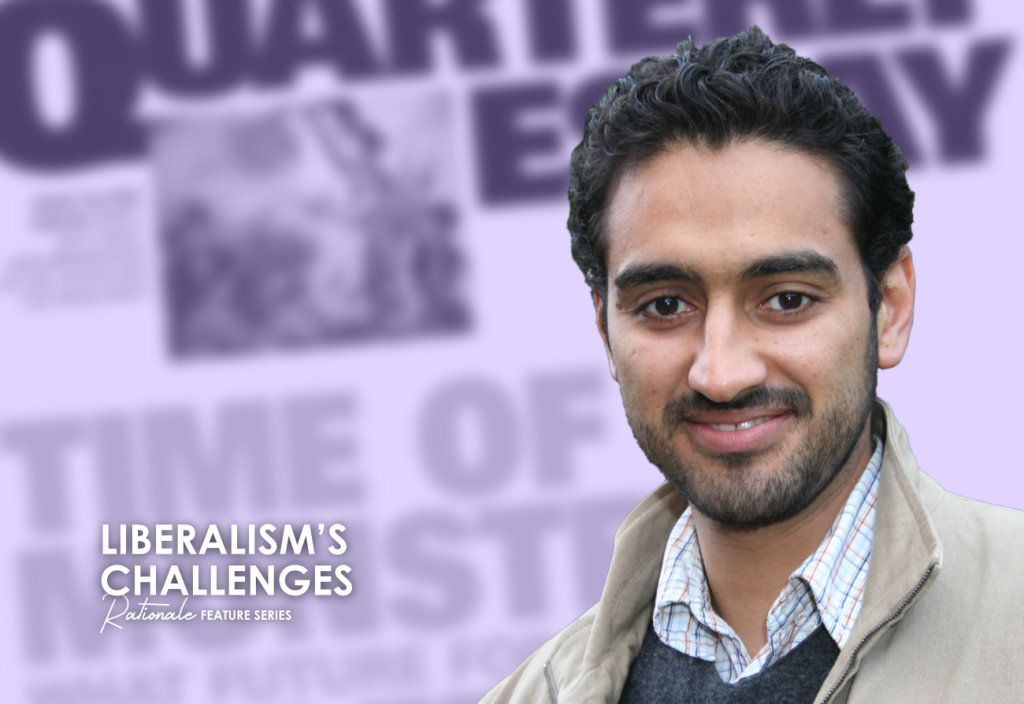
I met Waleed Aly, years ago, at a conference. He wore an immaculate thobe, the long neck to ankle white garment traditionally worn by Muslim men. The rest of us were dressed in suits and ties.
I introduced myself and we conversed. He remarked, with quiet conviction, that Australia was an ‘intolerant’ country. How so? I asked. “Well,” he responded, “if I was to call for religious government in this country I’d be howled down.” My immediate thought, which lingered for years, was “Is he Ikhwan – Muslim Brotherhood?”
I replied that if he called for religious government I’d be “on the other side of the barricades” – regardless of which religion he was suggesting should govern. But there seemed no doubt about which one he had in mind.
All that is deep background. He has now, by invitation, written a Quarterly Essay for Black Inc, in which he argues that liberalism is all but bankrupt and needs rethinking from the ground up. The essay caught my attention not only because the liberal democracies are, indeed, making heavy weather of it in the 2020s but because I recalled that encounter of many years ago.
Credit where credit is due. Waleed has done his basic homework and offers a well-informed discussion of the roots of liberal individualism and constitutionalism from Hobbes and Locke to Hayek and Rawls – though he misses Nozick’s Anarchy, State and Utopia (1974).
He discusses lucidly the social problems that appear to have arisen because of the inner logic of liberal individualism and the apparent inability of liberal institutions to turn these things around.
He writes of the breakdown in community, the growing stress on families due to women joining the workforce, the shrinking birthrate as individuals prioritise enjoyment and independence over marriage and reproduction. He draws on the research regarding the immense and, in some ways, baneful impact of social media.
None of this is particularly original or surprising; and the tone throughout is calm and compassionate, not angry or accusing. It’s an easy essay to read, and much of it one can readily agree with. Who among us is not troubled by many of these things? Not least those of us who grew up in large families, thriving communities and a stable society?
It’s what Waleed does not include in his analysis that niggles, once one realises what he leaves out of the picture. There is no comparison with other social orders or constitutional systems, past or present. One could be forgiven for thinking that the social problems to which he refers are solely the affliction of liberal societies and that other societies are just fine. Muslim ones, for example?
Waleed is a Sunni Muslim of Egyptian descent who was born in Vermont, an eastern suburb of Melbourne, very close to where I myself grew up (in Nunawading). But he was born in 1978, when I was already in second year university. It may well be that he looks back on his childhood as fondly as I do on mine and is concerned about how our society seems to be fraying.
Yet, it needs to be said that even now we have it far better in Australia than do, for example, people in Egypt, Syria, Iran, Iraq, Turkey, Libya. Is that despite the fact that we have a liberal and largely secular society, or because of it? One has the uneasy sense, in between his paragraphs, that Waleed privately harbours a belief that our society would be better – more harmonious? – if it was governed by his vision of Islam; perhaps an idealised version of classical Islam.
This feature of the essay is perhaps best encapsulated at pages 86-87, where Waleed writes of “the despotism of choice”, arguing that: “Everyone’s choices over time [regarding women’s freedom to enter the workforce] have given us barely any choice in the matter… We’re replacing one set of norms that limit our choices with another set.”
Yet, he looks without enthusiasm on budding ‘post-liberal’ offerings, remarking that they look like: “… a panicked attempt to apply the brakes or steer sharply in another direction. But … this is exactly why it ends up being wild and unprincipled.”
And this is true, he argues, on both the woke Left and the conservative or reactionary Right.
Here he writes (page 92) that conservative post-liberalism “asserts an objective morality, usually defined by Christianity (and especially Catholicism)”. His is a sympathetic summary of the case. He channels the Catholic communitarian philosopher Charles Taylor, but argues that the apparent attractions of this approach are stymied by the lack of any apparent way to bring such a state of affairs into being, short of oppressive imposition.
His declaration (page 96) “Machiavellian means will merely deliver a rejection of Aristotelian ends” reassures this writer, at least, that Waleed is not edging us subtly in a direction conceived by the Muslim Brotherhood.
His final section, refreshingly, is headed ‘Requiem or Rebirth’. Those of us who see ourselves as secular liberals or democratic socialists should heed these few pages (97-103) in particular.
“Across the liberal democratic world, even beyond it, the post-liberals seem to have all the energy all the political vitality,” he writes. What he is pointing to was written before the US mid-term elections. But it has evident relevance in France, Italy, Germany, the UK and even in Australia. Yet, he comments: “I don’t see a world where post-liberalism, at least as it currently exists, wins.”
Ominously, however, he adds (on page 100): “And yet I cannot imagine a final victory for liberalism either. It has had a stunning run. Its advocates can rightly point to its many achievements, from the abolition of slavery, to the people it has lifted out of poverty. But its fundamental wager was that these sorts of improvements would be perpetual and sufficient.”
They aren’t. That’s his premise. He apprehends, therefore, collapse – and a time of monsters. But he does not, to my relief, suggest that the Mahdi is coming or that religious government is the answer.
Published 20 November 2026.
If you wish to republish this original article, please attribute to Rationale. Click here to find out more about republishing under Creative Commons.
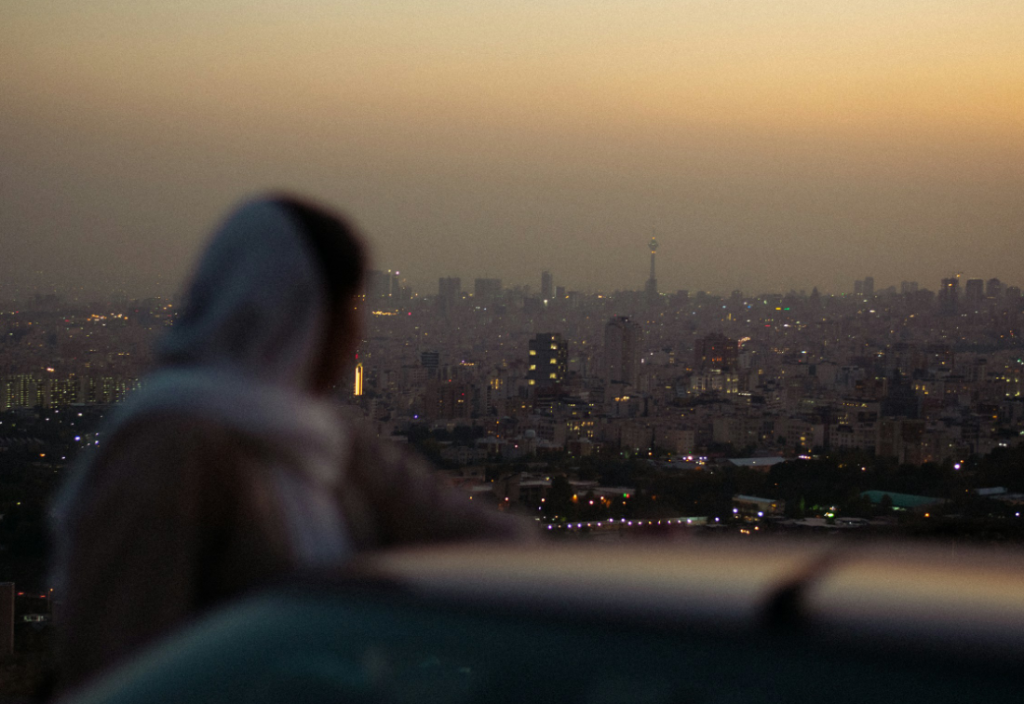
Image: Djaouhar Zine Elabidine Ouali (Unsplash)