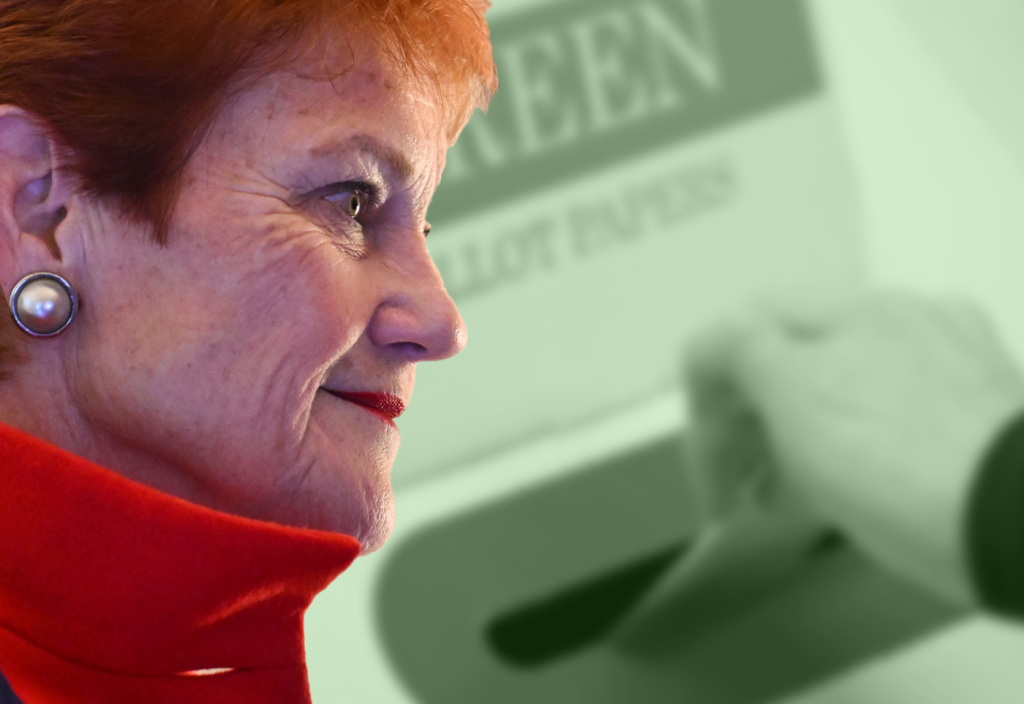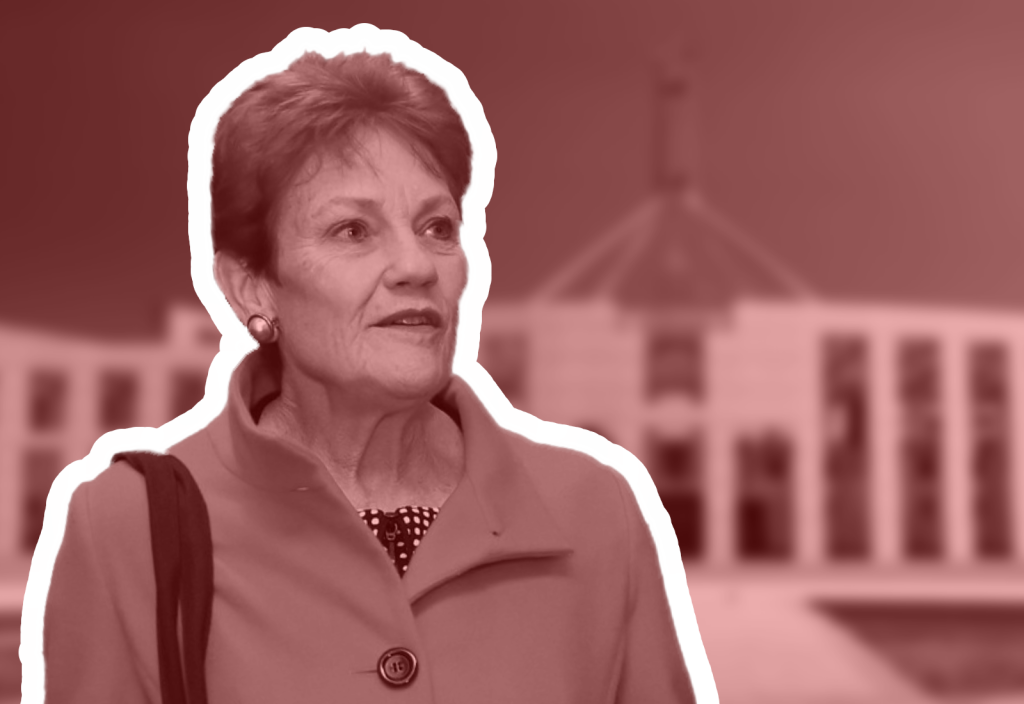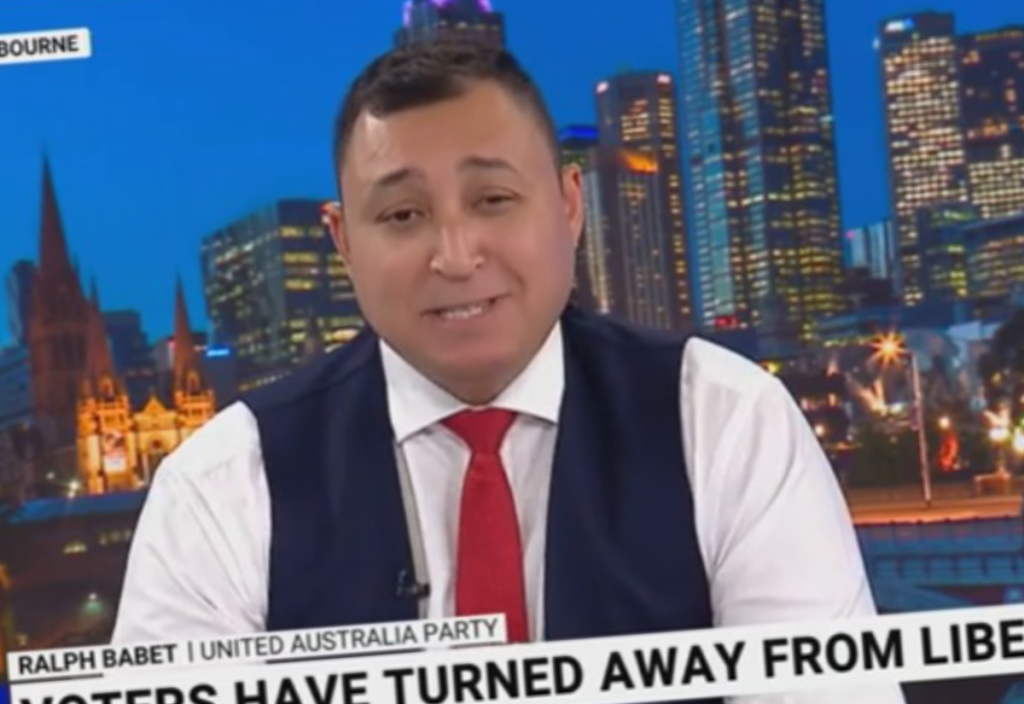

Pauline Hanson has gathered Christian conservatives, neo-Nazi fellow travellers and anti-establishment mavericks under one banner, but expects to run a command-and-control structure where she is in control. As the Victorian Election looms, and the scandals from within One Nation keep breaking, its own history says that ends in rupture. The ideas won’t go away, though.
This is a movement built to break. The big question is ‘what happens next?’
On the one hand, the One Nation surge seems to have come out of nowhere. On the other, it was entirely predictable. It followed a global movement in which social progressivism suffered a conservative blowback.
In May, One Nation’s David Farley won the Farrer by-election with 39.5 per cent of the primary vote, the party’s first ever seat in the House of Representatives. By October, YouGov had One Nation on 27 per cent, ahead of both Labor and the Liberal-National coalition.
Polls rise and fall, but with the Victorian election only weeks away no savvy politician is taking their seat for granted. The surge may deliver spectacularly and create a Frankenstein’s monster in a Liberal–One Nation arrangement, a possibility Liberal leader Jess Wilson has refused to rule out. Or it may fizzle into a handful of seats, which would still be unprecedented in Australia.
Either way, the result that matters won’t come on election night. It will come in the months after, when Hanson’s coalition has to start making choices.
Who is in the tent
The coalition behind the surge is an unlikely one. It includes churchgoers who want abortion restricted and ‘Judeo-Christian values’ restored. It includes men who marched alongside One Nation figures at the March for Australia rallies, some of them from the neo-Nazi National Socialist Network. And it includes a crop of anti-establishment candidates whose main policy is opposition to policy.
It is also broader than the stereotype. The surge is concentrated among people over 55, without a degree, in regional and outer-suburban areas. DemosAU found about one in three 2025 Liberal-National coalition voters with that profile have moved to One Nation.
But the line isn’t purely racial. It isn’t only white Australians voting for Hanson. Support also comes from people in disenfranchised and marginalised communities, including some who have lived through their own apartheid. Roy Morgan’s 2026 data puts One Nation support at 36 per cent among South African-born voters and 16 per cent among Filipino-born voters, but 5 per cent among those born in mainland China, despite Asian Australians having borne the brunt of Hanson’s racism for three decades.
That rhetorical flexibility helps build a coalition. It also makes one harder to hold.
Holding it together is a leader who has never presented as religious, and who runs her party on a principle she stated at the National Press Club: “I have to be in total control of it.” That sentence is the key to, and detriment of, One Nation’s future.
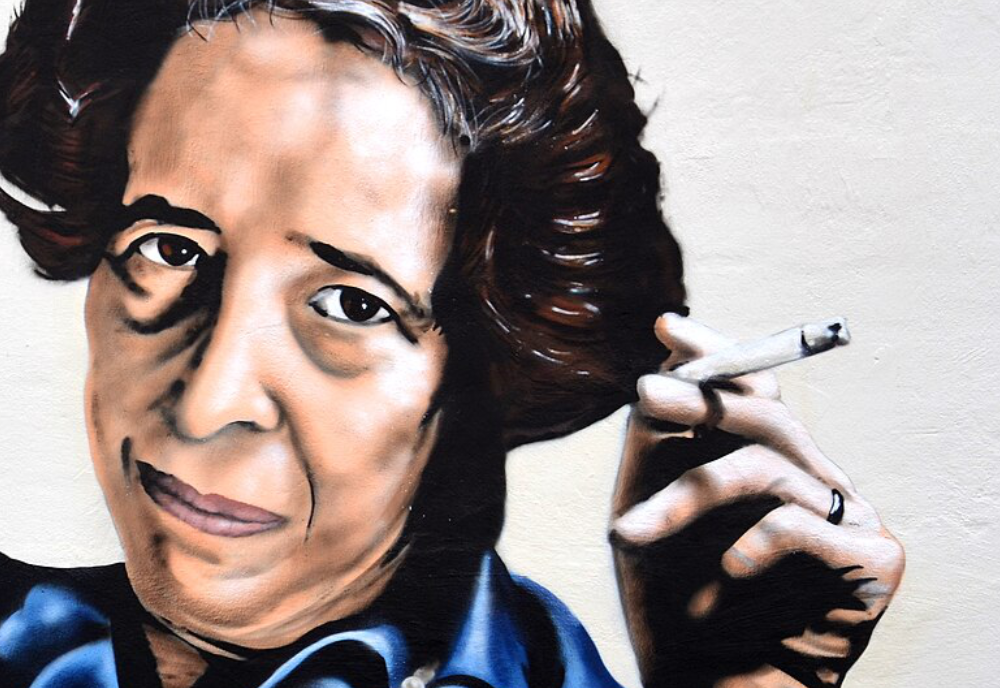
Hanson has assembled what the historian Robert Paxton would recognise as the raw ingredients of a fascist compound: religious conservatives, a radical populist Right, and ethnonationalists who turn up at the same rallies. To be clear, this is not a claim that One Nation is a fascist party. It is a claim about structure. Hanson is trying to run an insurgent movement like a corporation. The ideology is insurgent. The architecture is command and control. They don’t fit.
The machine
In February, One Nation appointed Kelvin Morton as general manager. He is a corporate consultant with no apparent political experience, and his stated mandate is to build a “professional, scalable, and legally robust organisation.”
Crikey’s investigation of the rules he enforces describes a party designed from the top down. Branches can’t hold bank accounts. Locally raised money flows to central accounts, and all branch spending needs approval. Branch members can’t speak to journalists or run social media without head office approval. A July memo warned that “one person speaking out of turn can undo the disciplined work of every other branch in the country.” The federal executive can overturn branch decisions and intervene in branch elections. In April, every branch was ordered to reconstitute, and some were dissolved.
Also, candidates go through a secret vetting system called ONTRACE: a 10-year record check, social media screening and psychological testing, with no right of appeal. Some Victorian hopefuls said they were asked to sign NDAs and pay $5,500 to stand.
The party claims 60,000 to 70,000 members. Under these rules, they are closer to subscribers than participants. Power runs one way – from Hanson, her chief of staff James Ashby and a small executive, down to the branches.
The irony is hard to miss. A movement that rallies under the banner of free speech and anti-elitism runs on gag orders, billionaire funding and centralised control. Its whole pitch is: government is corrupt, secretive and untrustworthy. Yet, the organisation offering itself as the better alternative asks its candidates to sign NDAs.
Why? In my work with survivors of coercive and high-control groups, that is a familiar tactic. NDAs keep wrongdoing under wraps and keep scrutiny and accountability at bay. Voters are entitled to ask what One Nation expects its candidates to keep quiet about.
Built on rogues
Hanson’s obsession with control is a lesson from experience. History shows that while she peaks in the polls every so often, people soon remember why they didn’t like her, and she doesn’t play well with others.
Few Australian parties have lost their elected members as reliably as One Nation. Of the 50 people who have served in parliament for the party, 35 have since departed. Of the first 20, elected from 1997 onwards, 18 left.
The pattern started early. One Nation won 11 seats at the 1998 Queensland election. Within a year, five MPs had split in protest at the centralisation of party affairs, and five more followed by the end of 1999.
The 2016 Senate team fared little better. Rod Culleton left within months. Fraser Anning sat as an independent from his first day. Brian Burston quit in 2018 after a dispute over company tax cuts. In New South Wales, Mark Latham was sacked as state leader in 2023 and left the party.
Why is this so? Because One Nation recruits for defiance. It appeals to voters and candidates who distrust parties, institutions and expertise, and its candidates are often chosen for their anti-establishment profile rather than any policy programme. Its biggest recent recruit fits the mold. Barnaby Joyce joined in December 2025 to lead its NSW Senate ticket. He is a former deputy prime minister best known for defying his own side.
You can’t run a command-and-control structure on people whose common goal is raging against the man, whose main contribution to policy is tearing it down, and whose most prominent players, from Joyce to Cory Bernardi, are not made for submission. They won’t play nice for long.
The cracks are already showing. Farley has wandered into the Liberal party room and mused about how comfortable he would be there, and has voted almost entirely with Labor and the teals.
In South Australia, Steven Virgo used his maiden speech to come out as a gay man who has lived with his immigrant partner for a decade. Both men had failed in preselections for other parties before finding a home in One Nation. And the Victorian campaign has offered the comedy of an anti-Asian party leader standing beside a candidate who switched to Japanese halfway through a press conference.
Hanson was not amused. But the command-and-control dream holds – for now.
Where it breaks
Being against things costs nothing. That is why coalitions built on common enemies are strongest in opposition. Governing, or even holding the balance of power, means choosing, and every choice tells one ingredient it matters less than another.
One Nation is already reaching that point. In South Australia, its MPs hold decisive numbers in the upper house. After the next federal election, it could hold the Senate balance or more. That is when the fault lines open, and there are three.
1. Faith versus blood
The religious Right wants a moral programme: abortion limits, religious freedom laws, “parental rights”. The ethnonationalists want a racial one. Hanson’s civilisational language lets Filipino Catholics and neo-Nazis cheer the same speech. But a law, a preference deal or a candidate has to pick a side, and whichever side it picks, the other notices.
2. Freedom versus order
The insurgent wing came through the freedom movement, defined by hostility to state power – lockdowns, mandates, surveillance, regulation. The Christian Right wants the state to enforce its morality, with a freedom-for-me-but-not-for-thee view of religious liberty. Those positions can share a rally. They can’t easily share a legislative agenda. The first time One Nation votes to expand state power over people’s bodies or classrooms, the freedom crowd will ask whose freedom they are fighting for.
3. Rogues versus the machine
The economist Albert Hirschman argued that unhappy members of any organisation have two options: voice or exit. One Nation’s architecture has removed voice. There is no branch autonomy, no published preselection rules, no right of appeal and no talking to the press. When disagreement comes – and in government it always does – exit is the only door. Burston left over a tax vote. The Queensland MPs left over centralisation. We will see more of the same.
This is why the architecture doesn’t fit the ideology. A compound of the kind Paxton described survives by persuading each ingredient that the movement is theirs. Hanson’s structure tells every one of them it is hers.
The real election results
Paxton chose his word carefully. The ingredients of fascism are marriageable – capable of union, but well short of soulmates. What turned them into regimes in the 1920s and 1930s was a movement that gave each faction a stake and a voice, then seized the state.
One Nation has the ingredients but not the glue. Hanson has bet that discipline can replace shared purpose, and that NDAs and vetting can hold together what common passion alone cannot. Her party’s history suggests she will lose that bet once the votes are counted and the choices begin.
The real results, then, won’t be handed down on 28 November in Victoria, or in New South Wales in March, or at the next federal election. They will come in the months after each, when the scaffolding of anti-policy rogues is put to the test.
Fracture is not defeat
None of this should reassure anyone. When One Nation splintered in the past, its fragments did not moderate. Fraser Anning, by then sitting with another party, used the phrase “final solution” in his 2018 Senate maiden speech. And the major parties have a long record of absorbing One Nation’s agenda once the party itself falls apart. A broken compound can still leave its residue everywhere.
Liberal moderates may be quietly cheering as voices within the religious Right call for a mass exit to Hanson. They may yet find the dregs back in their own ranks, louder and more radicalised than when they left.
The orange promise always goes mouldy. But the ideas outlast the party. Australia should be preparing now for what happens after the break-up, because the people drawn to this coalition, and the grievances that drew them, will still be here when One Nation isn’t.
Published 5 November 2026.
If you wish to republish this original article, please attribute to Rationale. Click here to find out more about republishing under Creative Commons.
Image: Screenshot, ABC News (Australia) (YouTube); Merrilee Schultz (Unsplash).