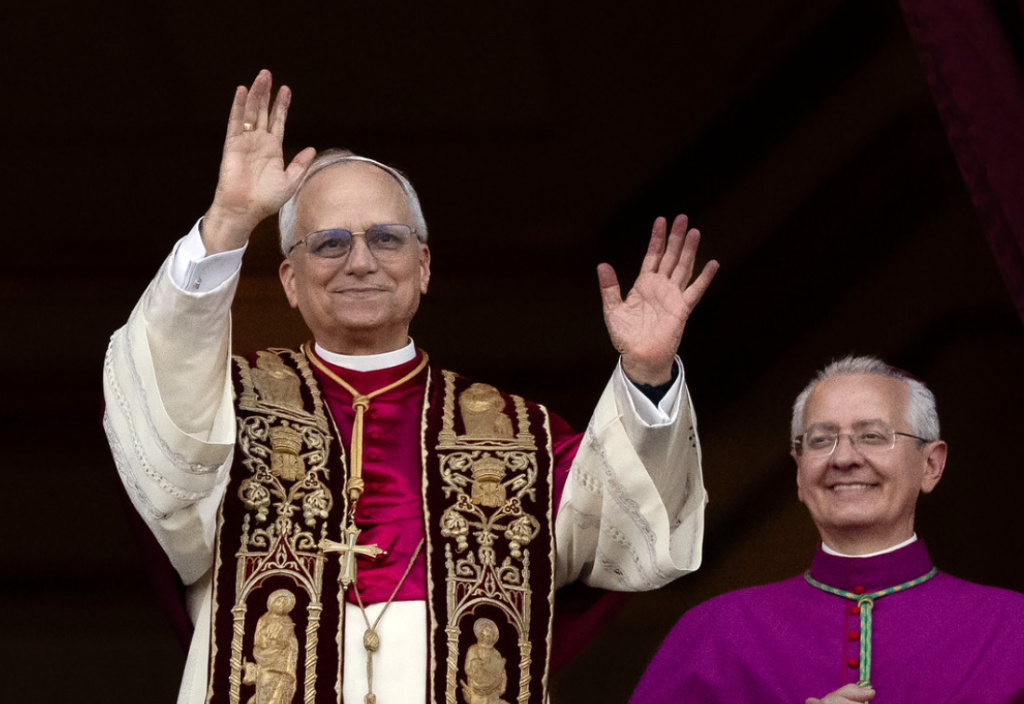

In early June, in this magazine, I expressed exasperated astonishment with Pope Leo XIV’s encyclical on artificial intelligence (AI) and the human future because its entire text contains not a single citation from any research on AI as such, whether from a technological or from a socio-economic point of view.
Instead, it refers exclusively to earlier Papal encyclicals and the work of a handful of theologians who lived and died many centuries before there was any such thing as AI. The one exception is a brief quote from Hannah Arendt, who died in 1975, but was, at least, secular, Jewish and a social theorist.
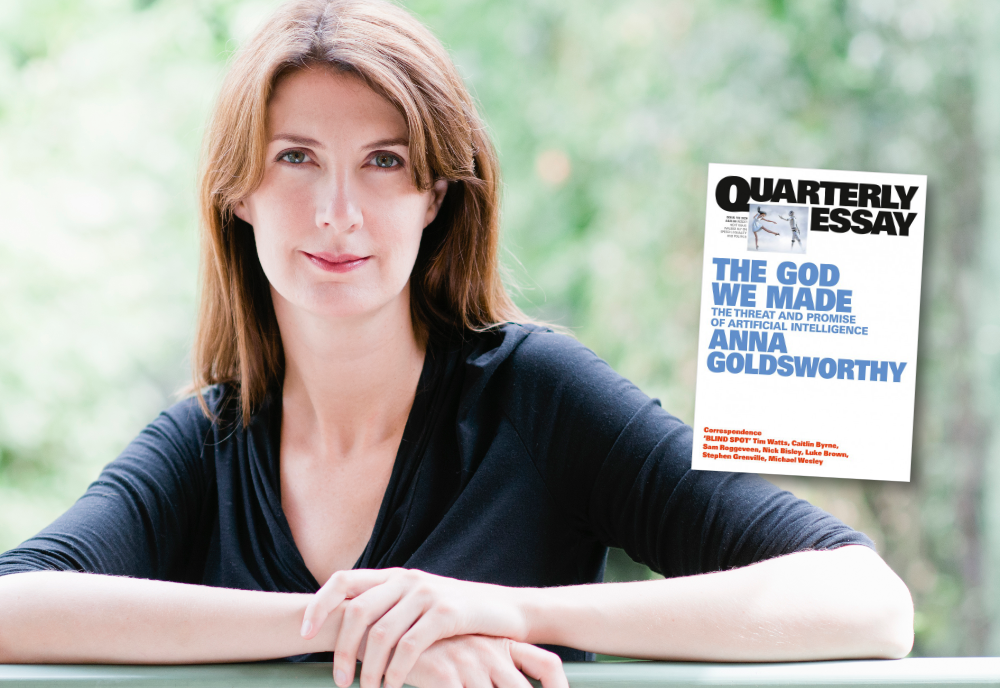
It’s worth juxtaposing this strange, introverted approach at the Vatican with the recent Quarterly Essay by our own Anna Goldsworthy, a multi-talented Australian author, concert pianist, artistic director and mother. It’s called ‘The God We Made: The Threat and Promise of Artificial Intelligence’. By odd coincidence, it is the same length as the Papal encyclical, at 84 pages plus endnotes. It has only 78 endnotes to the encyclical’s 224. But Goldsworthy’s endnotes are full of citations from cutting-edge research.
Goldsworthy writes with a directness and a down-to-earth humanity that brings her argument to life. She begins with allusions to our haunting myths:
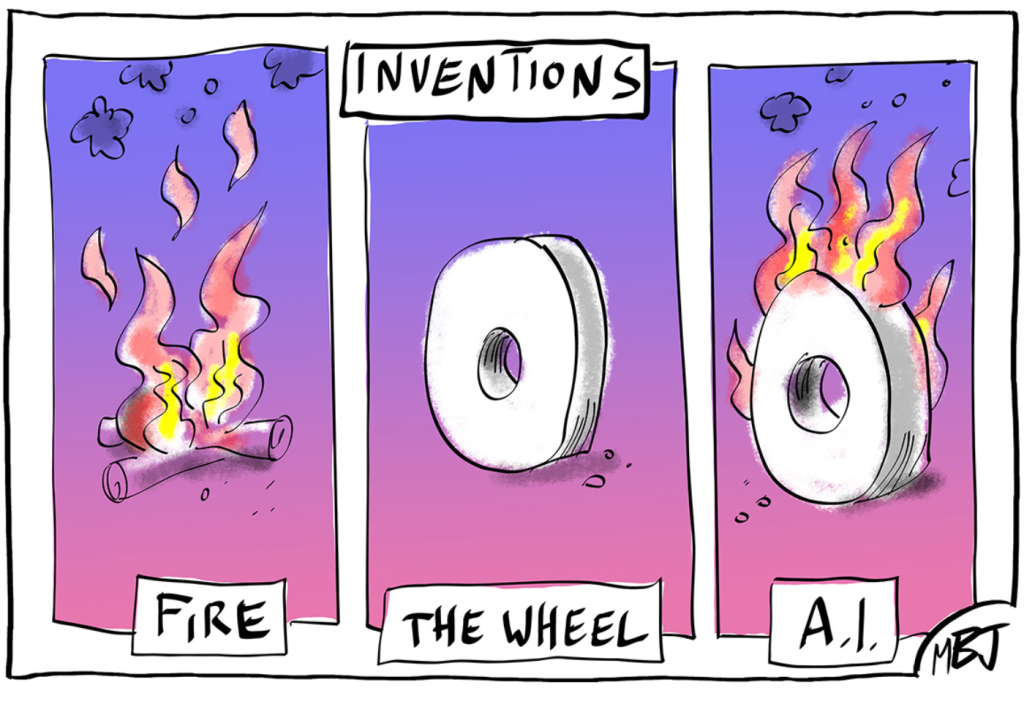
Prometheus stole fire. Pandora opened the box. Icarus flew too close to the sun… Eve ate the apple. Curiosity killed the cat. Oppenheimer built the bomb.
But she contemporises and personalises the current problem at once:
My children are early adopters, as children tend to be. Once I was an early adopter too – gleefully manoeuvring the neighbourhood’s first mouse for my father’s Macintosh 128K – but now I am the humiliated Gen-Xer, patronised by my children as I fumble over my phone.
She draws us straight into the vertiginous experience of coping with the wild ride that 21st century technological innovation has become. And she doesn’t falter in moving between the general and the particular, the personal and the sociological, the technological and the psychological. I hope they are reading this essay in the Vatican.
She also has a gift for metaphor which makes reading her essay stimulating, where the Pope’s text is soporific. In discussing the looming technological tsunami of Artificial General Intelligence (AGI) and Artificial Superintelligence (ASI), she writes:
The challenge is not simply the prospect [of AGI, then ASI] itself, but the pace at which it is coming: the sooner it arrives, the less time our human-paced minds have to prepare for it.
There is also the unsettling possibility that we may already be much further along than we realise. That the transition to AGI may not announce itself clearly, but will only be visible in retrospect: the late realisation that the shoreline has vanished behind us.
Reading Goldsworthy, I feel in touch with a way of looking at the world that takes me back to reading Isaac Asimov and Arthur C. Clarke as a child. Reading Pope Leo XIV has no such resonance – unless one has been obsessed for decades with Papal encyclicals.
The Quarterly Essay has ten brief chapters – ‘Genesis’, ‘Day of Judgement’, ‘All Is Toil’, ‘Song of Songs’, ‘The Word’, ‘A Still Small Voice’, ‘Set Me As a Seal’, ‘House of Wisdom’, ‘Hear My Cry’, ‘The Garden’. It’s striking, given how much less theological her text is than the Papal encyclical, that her chapter headings are so rich in Biblical rhetorical tropes. She derives them from the poetics of Western culture, not from a hieratic or dogmatic tradition.
This shows up, across the essay, in a wide and stimulating range of reference, from Socrates to Martin Luther King, from Geoffrey Hinton and Sam Altman to Toby Ord and Malcom Gladwell, from Aristotle to Igor Stravinsky. In short, she does in spades exactly what the Pope strangely avoided doing: she directly discusses the tech bros and their plans for us all.
Importantly, her essay is not a polemic or a one-sided expression of either enthusiasm or alarm. It is a wide-ranging, highly intelligent reflection, based on wide reading, open-minded thinking and a refreshing facility for writing engaging prose. In a particularly striking paragraph, she uses the simile of learning to master an art by way of making the point that difficulties are what extend us and drive us to seek perfection and transcendence:
…Creativity flourishes under limitations. I have devoted much of my life to the somewhat ludicrous problem of making the percussion instrument of a piano sound like a voice or an orchestra, of attempting to press human experience through an imperfect machine of hammers and strings and levers. But if the awkwardness of the machine were eliminated, my spirit would not be freer. We set ourselves rules – for sestinas, sonnets and even soccer – in order to fly within them.
Her writing overflows with stirring and striking passages like this.
In the core of the essay, Goldsworthy reflects at some length and with wry humour on the question of Large Language Models (LLMs) and natural language, literature and jokes as human outputs, on writing style and fakery, machine reproduction and authorial originality. All this leaves the Pope’s lucubrations altogether in its wake.
At one disconcerting point, Goldsworthy writes of Replika, “the AI companion who cares”, invented in 2017 by a Russian-born American entrepreneur Eugenia Kuyda, after the sudden death of her close friend Roman. Replika enables users to develop a bespoke chatbot companion. Its user base is said now to number 40 million, and a Harvard Business School study in 2023 found that 40 per cent of users had developed “romantic relationships with their chatbots”.
This datum is in the middle of the chapter ‘Set Me As a Seal’. The following chapter is on the future of the university and the vital need for human beings to master critical thinking. Then, in the very brief ‘Hear My Cry’, we learn of the personal doubts and misgivings of leading figures in the AI field. Those three pages are key. Read them first, then the rest – slowly.
Published 18 August 2026.
If you wish to republish this original article, please attribute to Rationale. Click here to find out more about republishing under Creative Commons.
Image: www.annagoldsworthy.com