
While Australian diplomacy claims to protect and promote universal human rights internationally, a credibility gap is becoming increasingly evident in regards to the country’s treatment of freedom of religion and belief domestically.
In government institutions and programs across Australia, non-religious people face continued discrimination and unfair treatment on the basis of religion and belief.
For example, many local governments and all state and federal parliaments – our most important institutions of democracy – impose acts of religious worship as part of formal proceedings, forcing many members of parliament to wait outside. As recently as December, a council in New South Wales ruled that non-religious councillors would have to “remove themselves” if they did not wish to partake in Christian worship at the opening of council meetings.
In the Defence Force, where 61 per cent of personnel identify as not religious, according to official data, Army and Air Force only supply religious chaplains –requiring theology degrees and endorsement by faith groups – as the frontline, uniformed wellbeing and pastoral care support.
Defence data has revealed the staggering gap in the level of support for religious personnel compared to non-religious personnel. As of November 2022, the ratio of Christian chaplains to Christian personnel across Defence stood at 1:134. In comparison, the ratio for non-religious pastoral carers to non-religious personnel was 1:11,992. For Muslims, the ratio was 1:62. For Buddhists, it was 1:83.
Defence’s almost exclusive reliance on ordained ministers of religion as frontline wellbeing support means that otherwise suitably qualified non-religious people cannot fill the roles and that non-religious service personnel who do not want to talk to religious agents about their problems have reduced access to support. Collin Acton, the former head of Navy chaplaincy who was instrumental in having a handful of secular roles introduced into Navy’s chaplaincy branch in 2020, says that the religion-based model poses “an inexcusable risk to the health and wellbeing of our serving personnel”.
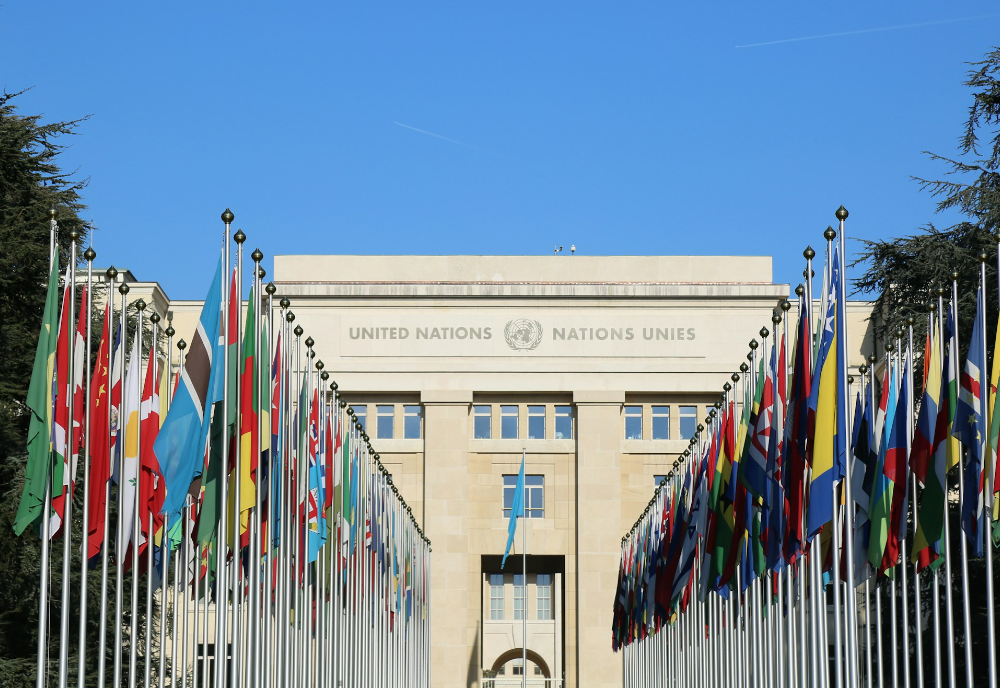
In mid 2025, my organisation, the Rationalist Society of Australia, raised these issues among a number of examples of discriminatory and unfair treatment as part of a submission to the United Nations Human Rights Council’s Universal Periodic Review (UPR) (fourth cycle) into Australia’s human rights.
The submission, endorsed by eight other non-religious, ex-religious, and pro-secular community organisations, argued that the ongoing discriminatory treatment against non-religious Australians in government institutions and programs is inconsistent with Australia’s international human rights obligations to protect freedom of thought, conscience and religion. It pointed to Australia’s human rights commitments under the Universal Declaration of Human Rights and the International Covenant on Civil and Political Rights, plus as a member of the International Religious Freedom or Belief Alliance.
We are hopeful that member nations of the international community will raise our concerns with the Australian delegation when the country appears at the UPR in Geneva next week on 26 January.
There is no doubt that Australia’s international human rights obligations extend equally to religious and non-religious people. The Attorney-General’s own departmental website makes it clear that these human rights commitments apply to religious and non-religious beliefs. Indeed, the website explains that the government: must ensure that legislation, policies and programs “respect the right to freedom of thought, conscience and religion or belief”; may not impose religious or other beliefs; and “may also be obliged to take positive steps, where necessary and appropriate to protect this right”.
The only doubt is whether the Australian government will actually do anything to address this discrimination. When we asked Attorney-General Michelle Rowland recently what steps the Albanese government would take to address the discrimination, she failed to provide details. Instead, she said the government was “committed to its international human rights obligations” and to expanding a federal anti-discrimination framework to ensure people would not be discriminated against on the basis of their “religious beliefs or activities”. Such federal legislation, however, appears a long way off, given that the government seeks bipartisan support before moving forward.
On the international stage, Australian diplomacy should provide a strong voice for freedom of thought, conscience and religion. It should reflect the population that it serves – a population of immense religious diversity and, increasingly, of no religious affiliation. At the upcoming 2026 Census – which, regrettably, will again ask a biased question that presumes each respondent is religious – ‘No Religion’ will, based on the trends, overtake Christianity, marking a dramatic historical moment.
In many parts of the world, including in our own neighbourhood, non-religious people continue to face grave threats to their freedoms and personal safety due to religious-based bigotry and hostility. As such, we commend the work of our diplomats in advocating for an end to the death penalty as a punishment for blasphemy or apostasy.
In Australia, of course, non-religious people face nothing like those dangers. Yet, in modern-day Australia, it is surely unjustifiable that non-religious people experience second-class treatment and alienation in many government institutions and programs.
To be a credible advocate for religious and belief rights internationally, Australia must address the discriminatory and unfair treatment of non-religious citizens at home. The Albanese government and governments at other levels can help to achieve that by putting secular reform – removing religious privilege and ensuring equal treatment of all people, regardless of their religious or non-religious beliefs – on their agendas for 2026.
Published on 21 January 2026.
If you wish to republish this original article, please attribute to Rationale. Click here to find out more about republishing under Creative Commons.
Photo by rishi on Unsplash.