
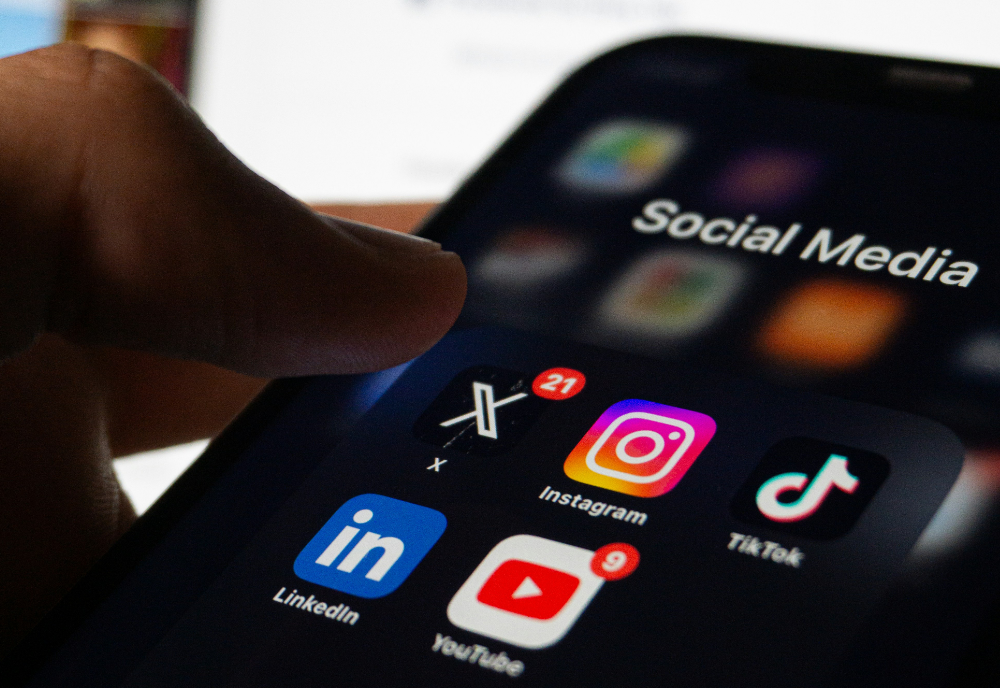
The federal government’s Online Safety Amendment (Social Media Minimum Age) Act 2024 will today take effect, restricting Australian teens under 16 from accessing most social media platforms.
The government says the ban is aimed at reducing the “pressures and risks” children can be exposed to on social media, which come from “design features that encourage them to spend more time on screens, while also serving up content that can harm their health and wellbeing.”
This attempt at regulating the social media market is very popular. It polled extremely well and it was brutally pushed through the final session of parliament in 2024, allowing organisations only two days to comment upon the bill and make submissions.
If one is to accept government-commissioned studies, such as one conducted in February 2025 by the eSafety Commissioner, the findings paint a somber picture. Some 96 per cent of children aged 10-15 use social media, and seven out of 10 reported having been exposed to harmful content of varying severity.
I have not come across a single study that doesn’t call on social media platforms to better manage harmful content. However, I believe a total ban is simplistic and impractical.
Wherever legislation is framed around slippery language such as that found in the new Act – requiring organisation “take reasonable steps” in order to achieve compliance – we can be assured they will do as little as possible to achieve their obligations.
Unfortunately, “as little as possible” in this use case may mean social media platforms outsourcing age verification protocols to the cheapest third-party bidders with questionable regard as to how minors’ data is collected and maintained.
Hardly a week goes by that we don’t wake to the news of another company being the target of a large-scale data breach. The number of customers affected by such breaches – such as Latitude, Optus, and Medibank – is estimated to be over 30 million.
The social media ban on teens is a world-first initiative – that is, if you ignore blanket social media censorship as exercised by authoritarian countries such as North Korea, Turkmenistan and Iran. In those countries, the bans are, of course, driven by a fundamentalist national objectives. Still, it’s a little disingenuous of me to suggest we are in good company.
Digital Freedom Project, led by John Ruddick, a libertarian member of the New South Wales Legislative Council, has filed a challenge to the ban in the High Court. The Project argues the ban is unconstitutional because it interferes with free political communication and is an excessive government overreach.
The number of opponents to this ban is growing rapidly. The Australian Human Rights Commission, ReachOut, a youth mental-health support service, academics and media/communications researchers, politicians and civil-liberties advocates, all say the ban is misguided. And I agree.
This ban smacks of government laziness. Rather than investing in programs to help kids be safe, they chose to silence them. Rather than helping facilitate safer online behavior, they risk the possibility of having teens finding riskier ways to circumvent the ban, potentially leading them to less-regulated online spaces. Rather than educating young people on digital literacy, it seems they are punishing kids for the consequences of poor online safety. Rather than protecting minors’ personal data, they are exposing them to serious privacy risks and potential exploitation. Rather than working with and holding social media companies more accountable for creating safer platforms and improving their content quality, they seem to have drafted legislation on the basis of 1970s nostalgia.
The world has changed beyond recognition, and older generations don’t grasp how profound that change has been.
The eSafety Commissioner, Julie Inman Grant, who in early November added Reddit and Kick to the list of sites banned, herself gave the game away with a LinkedIn post lamenting that “All kids want to do these days is be YouTubers.” She urged them to head back into the band room and the village hall to show off their creative talents, as if those are still the thriving centers of youth expression they once were.
The world has changed beyond recognition, and older generations don’t grasp how profound that change has been.
Kids aren’t going to put down their phones and jump on their bikes and skateboards this week. It’s not going to happen. This generation, and the preceding generation, are digital natives.
Gen Alphas and Zs are firmly embedded into digital life and culture. Social media is often, like it or not, the main way they communicate outside school. It helps build identity, creates space for self-expression and provides entertainment.
Restricting access to Facebook or Kick will only see kids finding ways to either circumnavigate the system or jump onto alternate, less-regulated, and probably more nefarious platforms.
The government’s view, and the Safety Commissioner’s view, is that there will be adaptation and migration. And as that happens, that will be monitored. They will respond with what is on the list of platforms under the legislation.
This does nothing for and about substituting individual behavior. The desire for what social media offers will be sought in the forms of other technologies.
Reactance theory in psychology has taught us that when individuals perceive their freedom of choice is being restricted, they experience psychological reactance, a motivational state aimed at reclaiming that freedom.
But that’s not all. I should imagine the effects of suddenly losing access to years’ worth of carefully curated content, secret journals of those schoolgirl days, photos of life as seen through a child’s eyes, casual posts and life updates, and friends long forgotten by time can be one of the most emotionally devastating experiences a young person can go through.
Psychologically, it resembles grief, identity disruption and, in some cases, a form of traumatic loss.
The only way we’re going to affect appropriate social change and to reduce the amount of potential harm these platforms can create is to break their business model.
To break the business model, we need a digital duty of care strategy that requires big tech to put in place appropriate safety designs for not just kids but also adults, preventing algorithmic-driven behavioral modification – such as in facilitating constant engagement.
This much was articulated by Prime Minister Anthony Albanese when announcing the Online Safety Amendment (Social Media Minimum Age) Bill, and he noted “design features that encourage them to spend more time on screens.”
So perhaps we should be thinking about using the under-16 ban as the first building block of a different kind of regulation and engagement. A digital duty of care to stop the surveillance-based economy by big tech and rewarding the dopamine hits with shocking inflammatory content for everybody.
Australia has, for some period of time, extremely weak, not fit-for-purpose privacy laws inherited from past millennia. We need to take the United Kingdom’s lead on online privacy laws. The UK Online Safety Act 2023 places the responsibility on online platforms to make sure the content they make available to a user is age appropriate, and does that by age verification and other requirements.
The moral of the story is: if you take social media away from teenagers, you don’t get serenity — you get innovation, rebellion, and 11 new underground apps created in someone’s bedroom.
And, honestly, that might be more dangerous than TikTok ever was.
Published on 10 December 2025.
If you wish to republish this original article, please attribute to Rationale. Click here to find out more about republishing under Creative Commons.
Photo by Berke Citak on Unsplash.