
If you are not a Christian – think of, say, Bertrand Russell’s Why I Am Not a Christian (1927) – or, in fact, a devout Catholic, it’s not immediately apparent why you would take the time to read an encyclical by the Roman Catholic Pope on artificial intelligence (AI) and the human future.
Why not give priority to, say, the Special Edition of Scientific American (Winter/Spring 2025) on ‘AI: How the Machine Learning Revolution is Transforming Science and Everyday Life’? Or to the Essential Guide No. 23 from New Scientist titled ‘The AI Revolution: What the New Age of Artificial Intelligence Means for Humanity’? There are, of course, many deeply informed books on the subject.
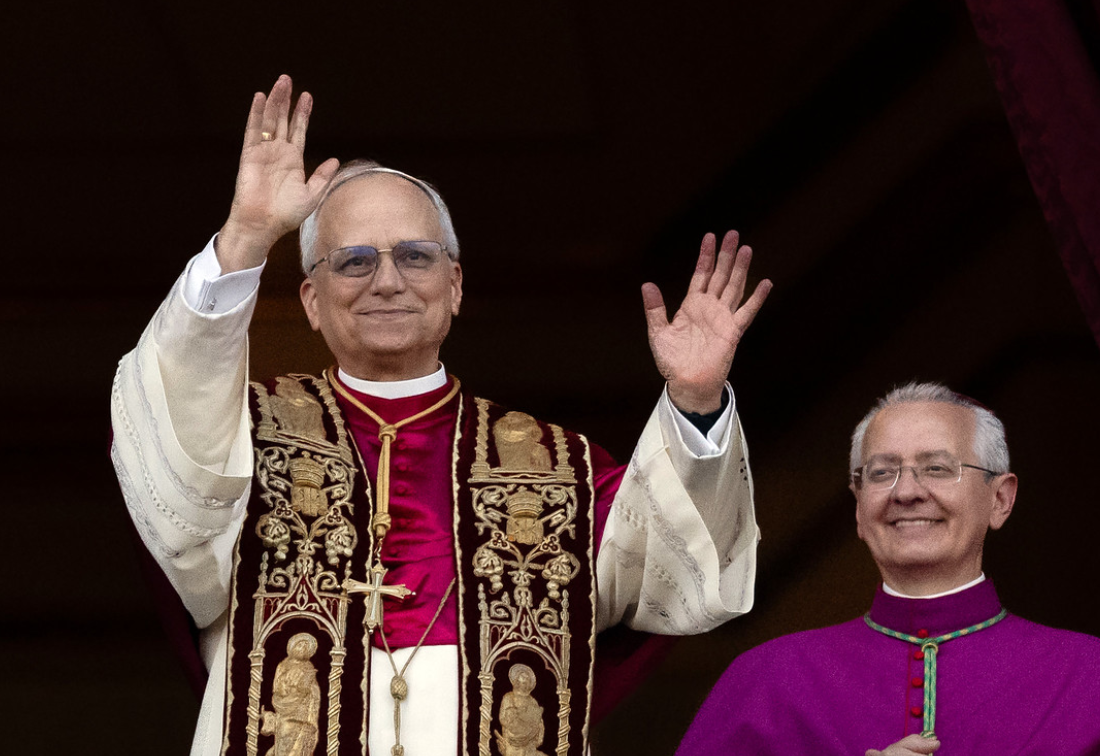
Yet, Pope Leo XIV has written an encyclical, Magnifica Humanitas, and people are reading it. If for no other reason than to be able to converse with others, whatever their beliefs, about what the encyclical says, it makes some sense to read it.
The encyclical runs to more than 80 pages. It’s very ecclesiological, which is to say very bound up with the Catholic Church talking to itself in its own language. Almost all the 200-plus endnotes are citations from earlier Papal encyclicals or other Vatican documents.
Hearteningly, there are almost a dozen endnotes which refer to other sources, though four of them are to Catholic theologians: St Augustine (354-430), Thomas Aquinas (1225-1274), and Romano Guardini (1885-1968).
There are also single references to Plato’s Seventh Letter, J. R. R. Tolkien’s The Lord of the Rings, Hannah Arendt’s The Origins of Totalitarianism, and Viktor Frankl. There is also praise for Beethoven’s Symphony No. 9 , Pablo Picasso’s Guernica (1937) and Stephen Spielberg’s film Schindler’s List (1993).
It need hardly be said that AI did not exist when any of these writings or other pieces of work were brought into the world.
Wouldn’t it have made more sense to begin with, for instance, Melanie Mitchell’s Artificial Intelligence: A Guide for Thinking Humans (2019), then expatiate on the looming dangers of AI and an AI arms race, before offering cautionary remarks from a Catholic point of view?
What Pope Leo XIV does is launch straight in with an allusion to Biblical mythology:
Humanity, created by God in all its grandeur, is today facing a pivotal choice: either to construct a new Tower of Babel or to build the city in which God and humanity dwell together…
Whenever humanity is in danger of marring its true identity, we Christians lift our eyes to the Incarnate God, knowing that it is “only in the mystery of the Word made flesh that the mystery of humanity truly becomes clear.” In Jesus Christ, this humanity in its grandeur becomes the Way, the Truth and the Life, opening the path for each of us to grow toward fullness.
That’s strange, on the face of it. And some readers might roll their eyes and cast the encyclical aside. But I suggest we approach the matter from a different point of view.
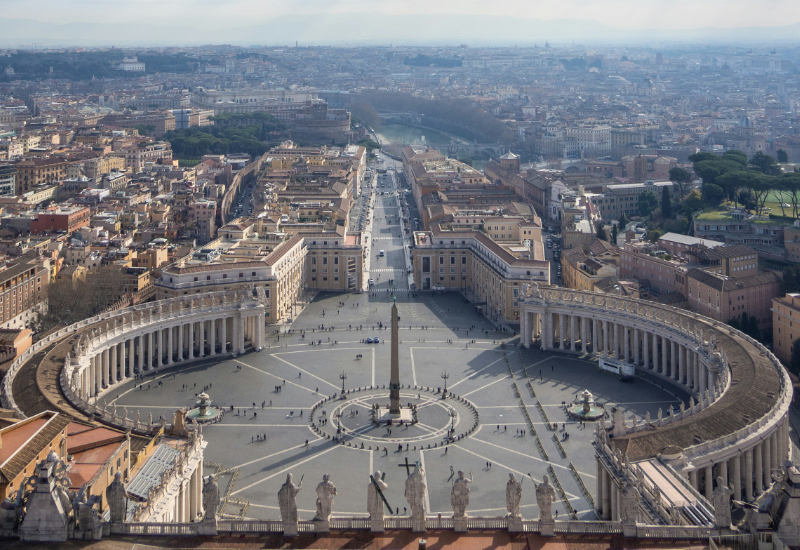
Early in his magisterial biography of the much admired German reformist theologian Dietrich Bonhoeffer, Eberhard Bethge relates how the young Bonhoeffer, sprung from a highly cultured, secularised upper middle-class German family, visited Rome at Easter 1923, with his older brother Klaus. He came away awed by a realisation that the Catholic Church went all the way back to antiquity and ran through Western civilisation like its backbone. He didn’t convert, but went back to Berlin and undertook a doctorate on the question, ‘What is the Church?’
This, I suggest, is the way to read and make sense of what the Pope is doing in Magnifica Humanitas. The encyclical has an introduction, then five chapters: A Dynamic Approach Faithful to the Gospel; Foundations and Principles of the Social Doctrine of the Church; Technology and Dominance: The Grandeur of Humanity in Light of the Promises of AI; Safeguarding Humanity at a Time of Transformation; and The Culture of Power and the Civilization of Love.
He evokes the encyclical of his namesake, Pope Leo XIII, Rerum Novarum (Of New Things), published in 1891, and states that a great deal is changing very fast and the Catholic Church needs to update its social teaching to address the astonishing challenges of the 21st century.
The best way to understand – as an outsider – what he is doing here is the tradition of story. Story, as compared with abstract argument, has the virtue of widening the reach of the imagination and offering similes or metaphors to the general understanding. He anchors his encyclical to the stories of the Tower of Babel, in the Book of Genesis, and of the rebuilding of Jerusalem after the Babylonian exile, as recounted in the Book of Nehemiah.
He then states:
In light of these two images, the Holy Spirit challenges us today regarding our relationship with technology and the ongoing digital revolution… The risk of dehumanization — of building a future that excludes God and reduces the other to a means — is an ancient and ever-new temptation that today takes on a technical guise. Instead, let us choose the ‘way of Nehemiah’, which highlights the importance of working together to make the City of God a safe place for returning exiles…
In short, the encyclical is a homily of a very traditional kind.
It covers a wide range of topics, but it does so in this homiletic fashion, without providing policy guidelines of any specificity.
The Pope concludes with highly theological observations like the following:
I would like to propose a sober yet demanding program of Christian life with which we can navigate this epochal change in the light of the Gospel. This avenue emerges through contemplating God’s plan, living ecclesial unity by partaking of the Eucharist, building a world centred on the common good and praying in union with the Blessed Virgin Mary.
The Pope is pitching for ritual and prayer in a time of radical upheaval. What we need are policies and well-grounded social innovation. These the encyclical doesn’t offer. It’s just an appeal for compassion and generosity. Talk about ‘Project Hail Mary’!
Published 7 June 2026.
If you wish to republish this original article, please attribute to Rationale. Click here to find out more about republishing under Creative Commons.
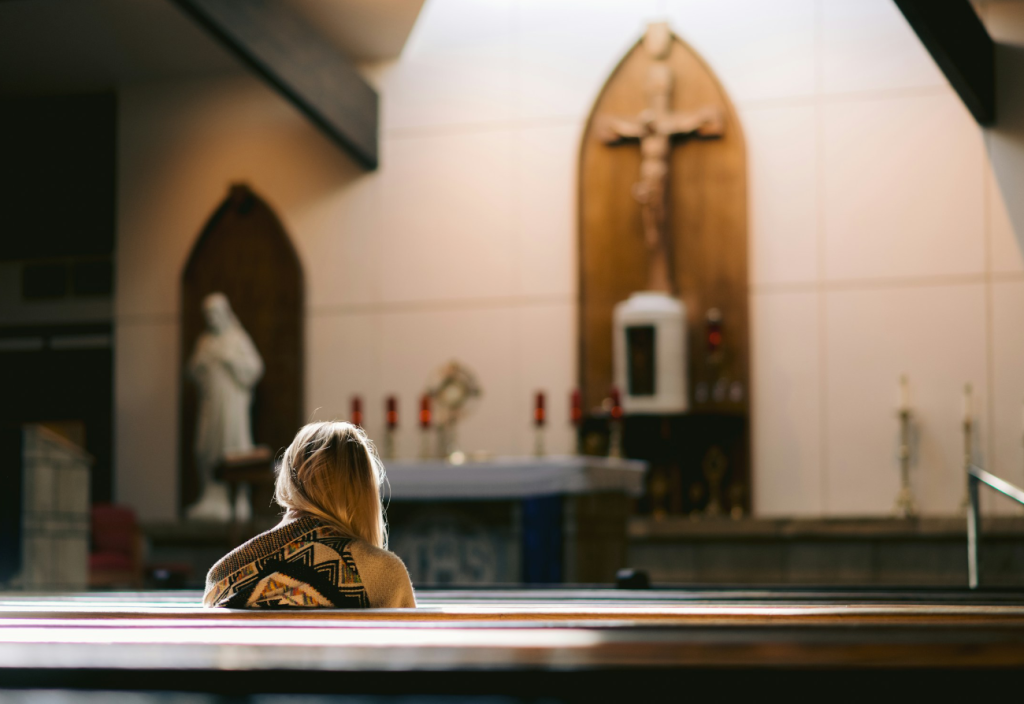
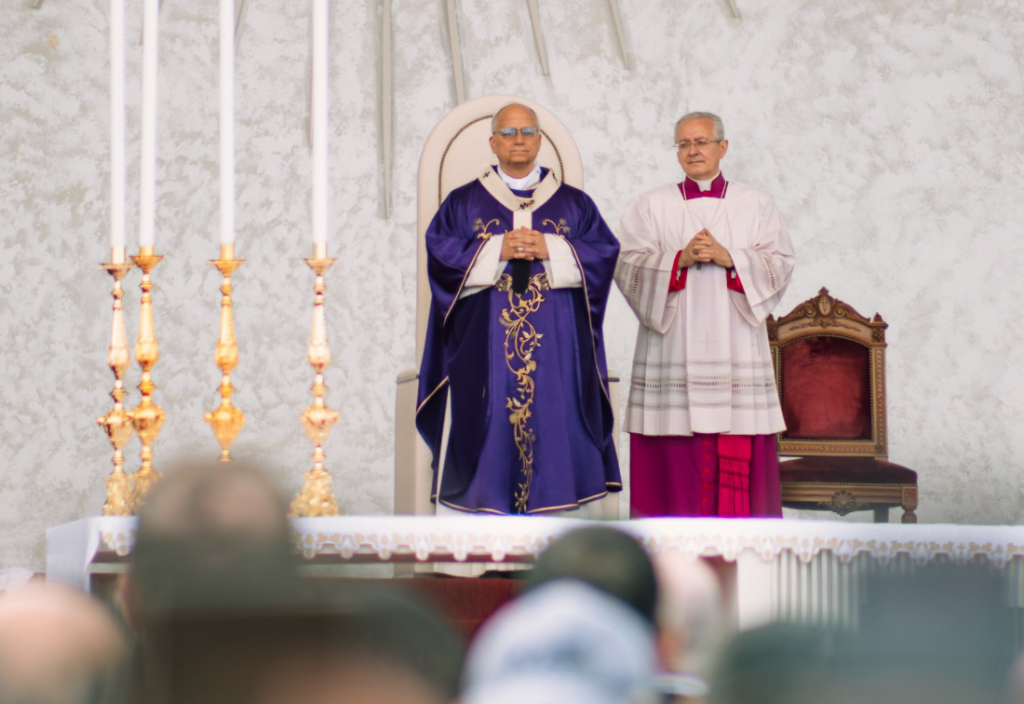
Photo by Catholic Church England and Wales (Flickr CC)