

Almost a decade after Hanna Rosin, editor at The Atlantic, published her book, The End of Men, she was invited to deliver the keynote speech at the 2025 annual Women in Media national conference in Sydney.
The not-for-profit nationwide initiative, supporting women working in all forms of media, characterised its decision to feature Rosin as marking an “important turning point in gender politics”. Her presence forced a reckoning on media framing and encouraged the industry to interrogate its own assumptions about representation, equity, and the stories it elevates.
If you think the provocative thesis-driven title of her book sits in contradiction with prevailing assumptions about gender-equality consensus, the subtitle of the book – And the Rise of Women – only reinforces the perceived contradiction.
The End of Men argues that major shifts in Western post-industrial economies have fostered the rise of new fields such as healthcare, education, and public relations – all modern labour markets which reside important engines for propelling women’s participation and influence.
These are sectors that don’t only demand less physical strength but necessitate superior communication, emotional and social intelligence. These are attributes that women are said to excel in for a variety of reasons, not least due to a combination of modest biological tendencies plus powerful socialisation and role-driven practices.
But, according to Rosin, men are increasingly pushed to the margins of emerging economies, and while women are prospering in roles unburdened by partners who contribute little domestically or financially.
The response to her book was immediate and markedly defensive – by men and women.
The reaction from men has been, by and large, as expected – mixed and frequently polarised. Amid a fast-evolving economic landscape, new workplaces are not just leaving men feeling increasingly isolated and alienated; they are places where men are struggling to adjust to or keep pace with.
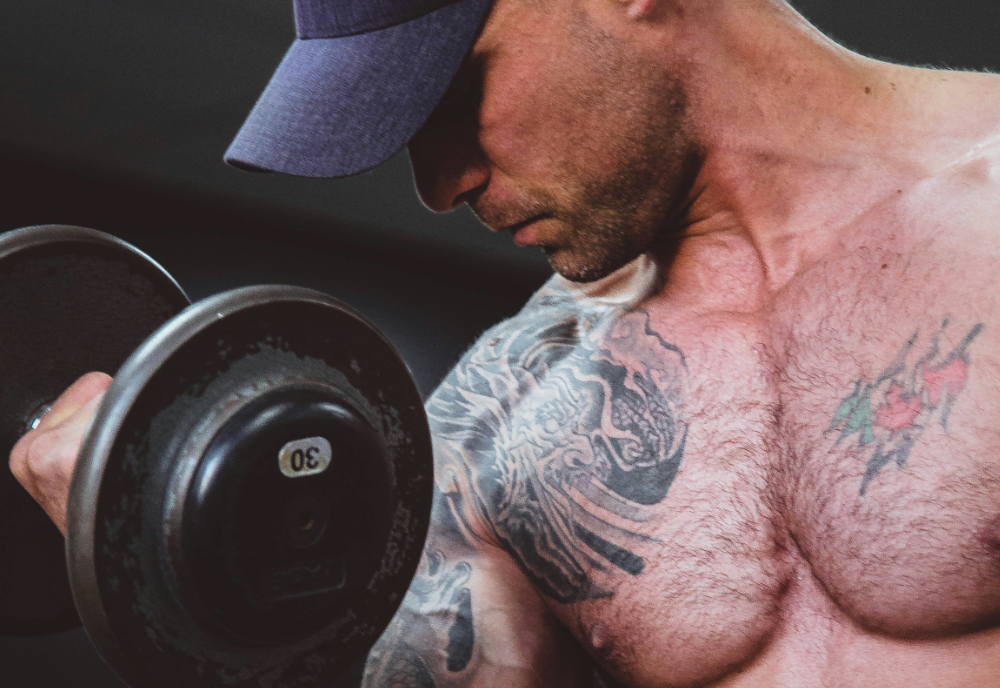
Social studies tell us when men – especially young men – struggle to develop a coherent and adaptive sense of self-identity, in the workplace and broader aspects of life, they frequently look for and find identity with easily accessible social anchors. These include peer groups, far-right online communities and, increasingly, extremist or hypermasculine ideologies.
Men in their thousands have sought and gravitated towards those such as Andrew Tate, the American-British online personality and former professional kickboxer known for his highly provocative misogynistic and anti-women commentary.
Tate functions less as a positive role model and more as a symbolic figure filling psychological and social gaps, whilst prompting a shift toward far-right ideology and associated patterns of polarised thinking.
But it isn’t just men reacting to Rosin’s book. Many feminists contend that her work implies women have definitively “won” the gender struggle, leaving little remaining to worry about or challenge.
Indeed, there is much to worry about. In the United States, gender-based polarisation increasingly reflects a politicised reaction to wider social upheaval. Appeals to traditional gender scripts such as the insistence on a cultural tautology – “men are men and women are women” – and the resurgence of the trad-wife aesthetic have grown more intense and uncompromising.
When audio emerged of then Republican presidential nominee Donald Trump sexually objectifying women in 2016, he brushed it off as “locker room talk.”
In 2025, President Trump paved the way for the same Tate to enter the US after being held in Romania facing rape charges. The Guardian described the news as: “Andrew Tate is back in the US – and a model of Trump’s worldview.”
This isn’t just an American phenomenon. Work undertaken by research company e61 Institute shows Australian Gen Z men are “more likely to hold further-right traditional gender beliefs than older men — and far more so than their female peers.”
Rosin wrote that, in Dickensian times, all the secretaries were men. She added:
“Then the secretaries become women – the typing school era. It became a more caretaking, maternal role. And the status and salaries immediately dropped. Caring is forever associated with femininity and is forever paid less.”
Despite legal, industrial and structural advances, occupational concentration then and now still comprises large numbers of women continuing to shoulder disproportionate domestic, caregiving and workplace-adjacent support roles – their economic participation constrained much in the same way as social norms maintained in Victorian times.
Fifty years after the 1972 equal-pay legislation, a significant gender pay gap persists in Australia. While successive federal governments have acknowledged and taken steps to frame the pay gap as part of the broader and ongoing structural problems, some people will tell you the gender pay gap is nothing but a myth.
In the US, reports from Donald Trump’s first time in office showed a pronounced gender pay gap in the White House. In 2017, female staffers earned about 63 cents for every dollar paid to men – a wider divide than under the previous administration.
Trump publicly maintained that women would earn the same as men when they “do as good a job.”
It’s not just Trump. Christina Hoff Sommers, of the American Enterprise Institute, calls the gender pay gap “a massively discredited factoid”.
Sommers argues that, once factors such as occupation, hours worked, experience levels, and other individual choices are taken into account, the “pay gap narrows to the point of vanishing”. But, in her eagerness to debunk the pay-gap myth, she sketchily overlooks and underestimates the very structural issues that shape those choices and outcomes.
But it’s impossible to compare ‘male apples’ with ‘female apples’. Sommers misses the fact that choices are shaped by unequal constraints — such as caregiving burdens, socialisation, occupational segregation, biased workplace practices, and cumulative lifecycle penalties. Indeed, these ‘apples’ are never the same to begin with.
Published 4 May 2026.
If you wish to republish this original article, please attribute to Rationale. Click here to find out more about republishing under Creative Commons.
Photo by Miguel Bruna on Unsplash.