

The changes made to higher education by the Labor government in 1988 took many years to filter through the Australian university system. Those changes had two key features: colleges of advanced education became universities or were subsumed into a university; and a requirement that universities become like businesses and become financially more self-sustaining.
Accentuated by the shameful neglect of technical and further education, universities over time became, in the mind of policy-makers, vocational and training institutions. Education, higher learning, and research became increasingly subservient to commercial and training goals.
The distinction between education and training has now almost collapsed. The internal management culture changed, and a shallow marketing mentality developed, valuing research and intellectual achievement primarily for the extent to which they provided market advantage and prestige for the institution.
‘Scholarship’ became an almost irrelevant word. As government funding per student decreased, student-to-staff ratios doubled, and universities boosted their income by charging high fees for a much larger number of international students. All these factors have contributed to the present state of crisis in our universities.
New universities and university colleges came into existence, offering overall a vast diversity of courses, from carpentry and golf-course management, to mathematics and quantum theory.
The intellectual demands across different aspects of research vary enormously.
Given current trends, one wonders whether, ultimately, any tertiary education or training institution will be able to become a university, especially as there is little evidence of longer-term thinking about the future structure of the higher education system.
This article examines the latter issue in relation to religious colleges that have fundamentalist attitudes and associations, and raises the issues that similar mental outlooks have in wider society.
The criteria for official university and ‘university college’ recognition are administered by the Tertiary Education Quality and Standards Agency (TEQSA). Registration of a university college by TEQSA allows for the possibility of becoming a university within five years.
TEQSA has academic freedom and free enquiry requirements for recognition as a ‘university’ or ‘university college’. ‘Academic freedom’ includes:
…the freedom of academic staff and students to engage in intellectual inquiry, to express their opinions and beliefs, and to contribute to public debate in relation to their subjects of study and research .
However, as the number of universities and university colleges has increased, there are university colleges whose commitment to free enquiry is problematic, despite their approved status.
In considering this aspect of the requirements, it is important to evaluate the actual intellectual culture and attitudes of an institution. A ‘tick the box’ approach, so common in current management practice, is not suited to serious scholarly and cultural evaluation.
One also suspects that government bodies have little comprehension of the actual beliefs and attitudes of some religious colleges.
A fine-grained approach is taken here in relation to Moore College, which was registered as a ‘university college’ by TEQSA in 2021. However, the case of Moore College is simply illustrative, the underlying question going to what the limits are, if any, for including a training or educational institution within the university system.
The present rules prohibit recognition of institutions that do not have academic freedom and open intellectual enquiry, but it appears that those rules are not being applied. The case of Alphacrucis University College is also considered.
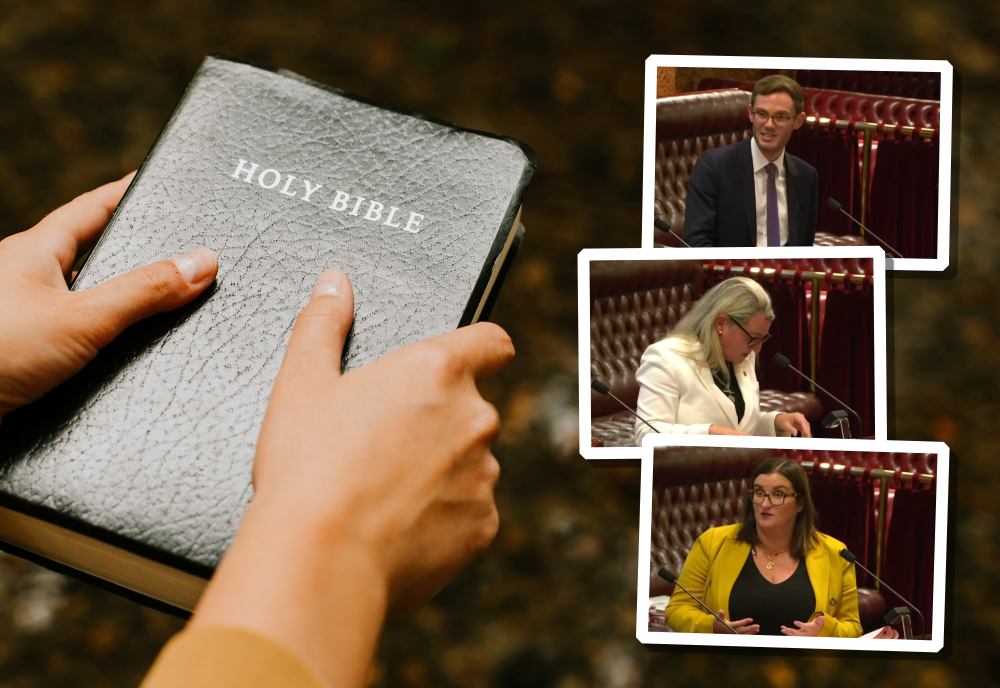
Moore College is a theological college within the Anglican Diocese of Sydney. The purpose of the college is to “prepare men and women for Christian ministry and mission”. The principal of the College from 2002-2013 was Dr John Woodhouse, who made a statement on Biblical inerrancy in 2012 and a second statement on Biblical inerrancy in 2013 which included the comments:
The Bible is the word of God. More than this, the Bible is the words of God. All Scripture is God-breathed. “All Scripture” in 2 Timothy 3:16…means “all Scripture”—every word… The promise is God’s word to us. God’s word to us is the Bible. God’s promise is neither deceitful nor mistaken. That is, the Bible is inerrant…I am thinking particularly about so-called critical biblical scholarship that has produced most of the Bible commentaries of the last 150 years. To read the commentaries with a firm belief in the inerrancy of the Bible frees you to disagree with the clever commentators-not because you are more clever, but because the Bible is true… Some see it [the doctrine of inerrancy] as anti-intellectual.
Note the tone of the words “so-called…scholarship”. It dismisses huge areas of scholarly research into the Biblical texts, and his statement taken as a whole is anti-intellectual and opposed to the open use of the mind.
The current principal of Moore College is Dr Mark Thompson, who succeeded Dr Woodhouse in 2013. Dr Thompson has made statements headed ‘The most valuable thing‘, ‘The importance of teaching the Bible‘, and ‘Is there a place for women on a theological college faculty?’ These include the comments:
God’s written word [the Bible] has a priority which is evident (we trust) in all we do. It does not need to be corrected, or clarified, or supplemented, precisely because it is God’s word… At Moore College, we want to sit humbly under the teaching of the Bible … It is because it is his written word…The authority which the Bible bears is the authority of God himself, since it is his written word… I do not believe it is appropriate, in the light of 1 Timothy 2 and 1 Corinthians 11 and 14, for a woman to lead a church … or to preach to a mixed congregation of men and women.
Although the word is not used, this is a statement of Biblical inerrancy, as well as indicative of what is expected of staff and students at the college. It also shows in a particular case how limited one might be forced to be in responding to a view of the Biblical text as inerrant.
A belief in the inerrancy of the Bible demands that all statements affirmed in the Bible must be true and cannot be questioned. This is revealing of the actual attitude of Moore College to scholarly research on the Bible, as distinct from ‘tick the box’ generic responses that TEQSA might require.
What happens when Biblical affirmations on moral or ethical matters contradict principles of common justice and morality? Expecting students to follow an approved text because it is stated to be inerrant, or not needing correction or clarification, may be acceptable in a training institution, but it is not acceptable in a university or university college where free enquiry is to be encouraged and even mandatory.
However, Moore College’s Academic Freedom Policy contains the statement:
The Academic Board … will endeavour to protect students and faculty from all undue interference and inappropriate pressure that might restrict academic freedom and from penalty or academic disadvantage as a result of exercising that freedom.
Apart from the inconsistency with the above statements of Dr Woodhouse and Dr Thompson, this policy raises several issues.
The use of the word ‘endeavour’ is a recognition that freedom of enquiry issues may well arise and that, as well, there is no guarantee that academic freedom will be respected. What form would any ‘protective endeavours’ take, and what are the ‘relevant criteria’ that might be applied for the examination and evaluation of non-conforming ideas? What constitutes ‘undue interference’ or ‘inappropriate’ pressure? What might constitute ‘appropriate’ pressure to change minds?
It appears likely that there could be ‘appropriate pressure’ to force a person to conform to the expectations of the College. The academic freedom statement also says:
The teaching faculty of the College exercise their academic freedom alongside and without conflict with their commitment to the authority of Scripture as the written word of God.
Again, this statement is problematic, since it seems that, to avoid conflict with academic freedom, academic staff are required to have a particular view on the authority of Scripture, thus violating academic freedom and the principle of free enquiry.
After all, Moore College states: “the final authority in matters of faith…is the teaching of scripture”.
The principal of Moore College from 1985-2001 was Dr Peter Jensen, who affirmed in his book The Revelation of God that he believes in the inerrancy of the Bible. Quoting the Chicago Statement on Biblical Inerrancy he says:
Those who who wish to confess inerrancy…. use the word ‘inerrant’ to signify ‘the quality of being free from all falsehood or mistake’, and hence assert that ‘Holy Scripture is entirely true and trustworthy in all its assertions’. This includes all matters historical and scientific in scope.
This illustrates the very wide extent of knowledge the doctrine of Biblical inerrancy claims for itself, and it appears that Dr Jensen applies it to himself.
Concerning Biblical scholarship he says:
And the first task of the [literary] critic is respectfully to discern and accept the actual nature of what he or she is reading: in this case the nature of the Bible… I shall refer to him [God] as the Author … Authentic Biblical criticism will respect the Bible’s reality as God’s word… we do not read it adequately unless it also reads us and holds us in submission.
This view means that the views of a Biblical critic who does not accept “the Bible’s reality as God’s word” are inauthentic and may be automatically dismissed if they are not convenient. Dr Woodhouse has puts it explicitly: “a firm belief in the inerrancy of the Bible frees you to disagree with the clever commentators”, and that would appear also to be the view of Dr Jensen and Dr Thompson.
Now, consider a student who submits an essay for evaluation which rejects the authority of the Bible on the grounds that it attributes immoral acts to God, and argues this with specific examples (such as Deuteronomy 7:1-2), scholarly arguments, and references. An evaluator holding Dr Jensen’s view would have to give a ‘fail’ for the essay regardless of the essay’s merits because, for the evaluator, the only ‘appropriate’ way to comment on the Bible would be to accept its divine authority in advance, which would not be the case for the student essay.
Of course, if the student were subject to ‘appropriate’ pressure to change his or her view, and if the student then changed her or his mind, it could be claimed that there was no breach of freedom of enquiry because it could simply be presented as a free change of mind by the student.
Whatever arguments that might be presented, the divine origin of the Biblical text must be accepted in advance and cannot be challenged. In such circumstances, how can a student have confidence that free enquiry will not lead to retribution, despite Moore’s claim that there is “freedom to subject all ideas to honest enquiry”?
Also, Moore College prepares “men and women for Christian ministry and mission”. So, given what Moore College considers is needed for ministry and mission, a student essay like the one above would be incompatible with the possibility of graduation.
Dr Jensen rightly says: “moral responsibility is seen to be the [literary] critic’s lot, whatever his or her ideological framework”, but that means that one must allow that a critic’s moral sense may lead to a rejection of the Bible’s authority.
The view that a proper study of the Bible requires prior acceptance of its divine origin has a necessary consequence that there can be no legitimate secular critique or analysis of the Bible, no matter how knowledgeable, thorough, or sympathetic.
Those who accept the religious belief of inerrancy may receive the comfort and certainty that it provides, and that cannot simply be dismissed. However, a genuine enquiry after truth cannot be limited by prohibition, as Galileo demonstrated, and one cannot obtain a precise and incontrovertible body of doctrine from a book as loose and frequently self-contradictory as the Bible.
Also, as the novelist George Eliot wrote: “so long as belief in propositions is regarded as indispensable for salvation, the pursuit of truth as such is not possible”.
Moore College’s academic freedom policy gives no assurance of genuine freedom and is an attempt to have one’s cake and eat it. A dominating culture of inerrancy vitiates intellectual honesty, academic freedom, and freedom of enquiry.
The above argument implies that Moore College should not even be a university vollege, let alone a university.
Alphacrucis University College attained that status in 2022 and has some commonalities with Moore College. In its statement of faith, Alphacrucis aligns itself with the doctrinal basis of the Australian Christian Churches (ACC) which, despite the name, does not represent all Australian churches but is a grouping of Pentecostal churches.
The ACC believes “the Bible is the inerrant, inspired and infallible Word of God and our highest authority for faith and practice,” which is the implied view of Moore College, and it has been the view of Moore College principals over the last 67 years.
Moore does not appear to make such a statement official, and one suspects that this is not a coincidence. After all, it does not have the formal ‘statement of faith’ which is usual for evangelical theological colleges, possibly because it has ambition to attain university status.
Both Moore and Alphacrucis eschew the term ‘fundamentalist’, although having a belief in the inerrancy of the Bible poses the question of whether they can legitimately deny the term. One might consider them to be ‘closet fundamentalists’. After all, if a college believes in infallibility and inerrancy of the Biblical text, why should it not be called ‘fundamentalist’?
The issue of free enquiry may arise also in religious colleges other than Moore and Alphacrucis. There is a certain irony in that inerrancy is not a Biblical doctrine; it is merely inferred from the status some parts of evangelical Christianity have chosen to place upon the Bible, despite the fact that inerrancy can be refuted by a single text: Matthew 24:34.
There are evangelicals who realise the intellectual emptiness in evangelicalism, and even express concern for its not-infrequent spiritual emptiness.
One of them is Mark Noll, author of The Scandal of the Evangelical Mind. He writes: “The scandal of the evangelical mind is that there is not much of an evangelical mind.”
The argument above allows for an institution with religious associations to be eligible for recognition as an Australian university. However, colleges or universities that affirm, explicitly or implicitly, the infallibility or inerrancy of the Bible, or which have a culture hostile to open enquiry, do not meet the legislated criteria for Australian ‘university’ or ‘university college’ recognition.
A college like Moore has a narrow and restrictive culture and has very specific training purposes, rather than purposes that are generic and educational. It should of course be permissible for colleges that are primarily training institutions to operate in accordance with their purposes, but it does not follow that they should be given ‘university’ or ‘university college’ status.
The apparent direction of university college approvals by TEQSA degrades the approved criteria, which in time could become more-or-less irrelevant.
Are we to end up in Australia, as in the United States, where there are numerous fundamentalist universities, some of them with marked political overtones? Not to mention McDonald’s Hamburger University in Chicago!
Tertiary education institutions hostile to open enquiry are likely to pursue ‘university’ status because that is perceived to confer intellectual respectability and prestige. But that is no reason why they should be given it.
Religious fundamentalism distorts reality for the sake of simplicity and marketing potential, and it asserts an intolerant certainty while at the same time seeking popular influence. It has a marked tendency to exclude, or ‘cancel’, and so promotes a ‘cancel culture’ that it excoriates when it is itself ‘cancelled’.
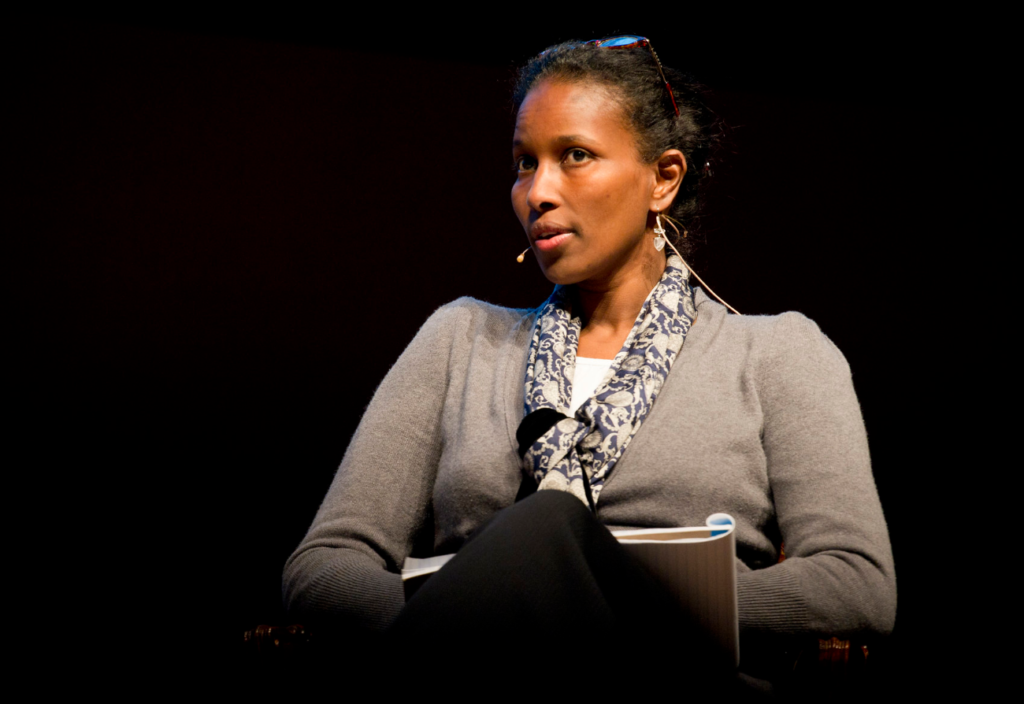
When Barry Jones gave the 2007 Manning Clark Lecture, he called it Restoring the Primacy of Reason in an Age of Fundamentalism, and the issues he identified are even more pressing today.
The mental attitude of fundamentalism affects wider discussion in society. Intellectually, the fundamentalist attitude is close to that of post-modern relativism in that personal or group belief is taken to validate knowledge, and there is little or no distinction between belief, culture and knowledge, with the effect of validating any idea regardless of merit or reason.
A similar view is also shared by the Right, as economic liberalism has spilled over into more than economics, and sees money and markets as determining values as well as the validity of human judgments and endeavours.
Post-modernism and economic liberalism each implicitly contains the idea that truth and knowledge are determined by demand – that is, by markets. Casualties of these dominant attitudes are the importance of facts, the centrality of reason, and the notion of truth, with an associated fragmentation of public life and community.
There is, nevertheless, little concern in a society in thrall to unexamined beliefs and the mind-emptying effects of its own technology.
One contribution to restoring the primacy of reason in our universities, at least, would be to apply existing criteria and exclude fundamentalist institutions that have barriers to free intellectual enquiry. This would be a move away from ‘degrees in dogma’, whether they are in religion or anything else, and promote a wider recognition of the educational and intellectual role that universities should play in the public life of Australia.
Published on 31 July 2026.
If you wish to republish this original article, please attribute to Rationale. Click here to find out more about republishing under Creative Commons.
Photo by Caleb Holden on Unsplash.