
How are we to think rationally and clearly about the drama unfolding in Iran? As a veteran historian and analyst of international affairs, I was asked to give an address on this topic on 11 February, the anniversary of the downfall of the Shah of Iran in 1979. The following column is a digest of my address on that occasion – about a quarter as long.
In mid-January, I walked into the Melbourne CBD to pick up a book from the Hill of Content shop – Inger Kuin’s Diogenes: The Rebellious Life and Revolutionary Philosophy of the Original Cynic (2025).
Diogenes was an interesting figure. Not least because, unlike Aristotle, who notoriously argued that slavery was ‘natural’ and that ‘barbarians’ (such as Persians) were natural slaves, Diogenes objected to the institution of slavery as a matter of principle.
As I reached the intersection of Bourke and Spring Streets, I saw that there was a demonstration going on around the steps of the state parliament, with red, green and white flags. Momentarily, I thought it must be yet another pro-Hamas ‘from the river to the sea’ travesty. I was mistaken, I soon realised. The demonstrators were calling for the overthrow of the Islamic Republic in Iran.
Within a matter of days last month – 8-10 January – the paramilitary forces of the Iranian theocratic regime, the Iranian Revolutionary Guard Corps (IRGC), are reported to have shot dead tens of thousands of unarmed civilians protesting against the regime’s character, policies and lack of redeemable legitimacy.
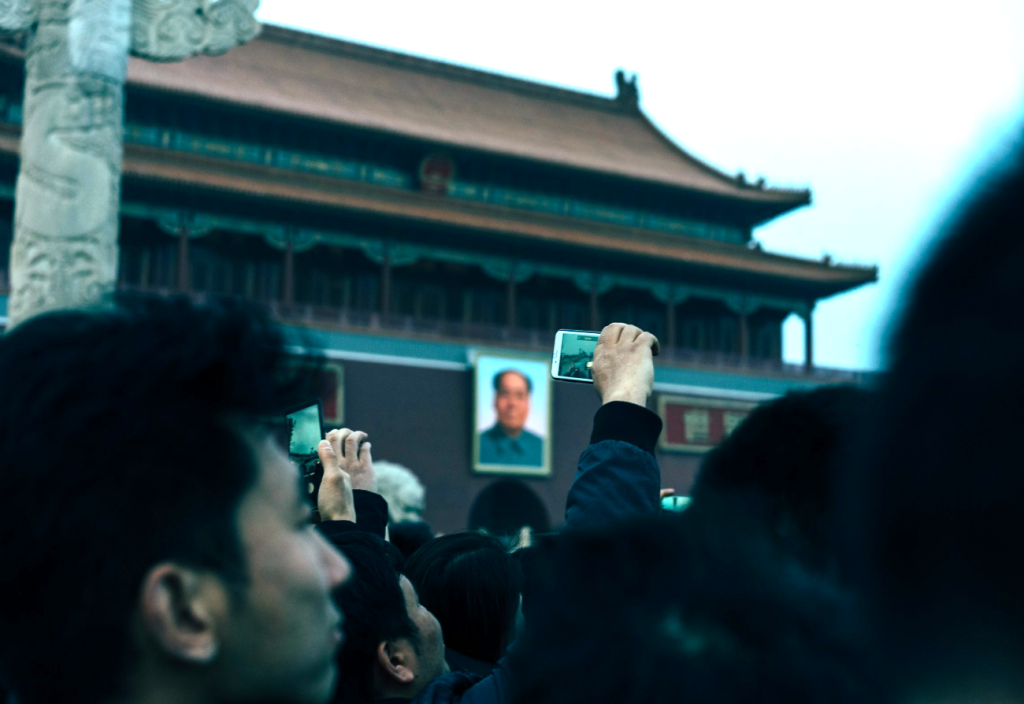
The regime initially declared, through its foreign ministry, that ‘only’ about 3,000 had been killed and that these were mostly policemen trying to quell a foreign-inspired counter-revolution. This was straight out of the Chinese Communist Party’s Tiananmen playbook. It is my understanding that even the regime now declares that some 30,000 are dead, which guarantees that that is a minimal figure.
I am old enough to remember the overthrow of the Shah in 1978-79. The Iran/Iraq war took place throughout the 1980s – as I was doing my PhD – and the only ray of hope in the whole of the Middle East was the Begin/Sadat treaty in 1979.
The Shah fled to Egypt in mid-January 1979, though his overthrow didn’t become official until 11 February 1979. The Accord between Egypt and Israel was signed on 26 March 1979.
This was all current affairs in the 1980s. At that time, I began to take a sidelong interest in Iran, reading: Ervand Abrahamian’s magisterial 1982 study, Iran: Between Two Revolutions; James A. Bill’s The Eagle and the Lion: The Tragedy of American-Iranian Relations; and the memoirs of the former head of the Shah’s secret police, SAVAK, Manzur Rafizadeh, Witness.
In 2004, Charles Kurzman put out a study through Harvard University Press, The Unthinkable Revolution in Iran, arguing that it was far from obvious that the Shah’s regime was riding for a fall:
According to social-scientific explanations for revolution, [the Iranian revolution of 1979] shouldn’t have happened when it did, or at all…The more we learn about the details of the revolution, the more evidence we find that resists existing explanations.
In particular, we find an atmosphere of overwhelming confusion. As protest mounted against the Shah, Iranians had no idea what was going to happen. Would the Shah’s regime fall? Would protest be suppressed, or peter out? Iranians polled friends and strangers ceaselessly to find answers to these questions, yet the answers careened unpredictably. In such momentous times, Iranians could not even predict their own actions, much less those of their compatriots.
This is a salutary reminder that history is not deterministic. We need very much to bear all this in mind in pondering the possibilities at this point in Iran’s history.
Kurzman drove home his argument in spirited and explicit terms:
This book examines the experience of confusion that was so widespread during the Iranian revolution. The analysis is limited to the period leading up to 11 February 1979, when the Shah’s regime was overthrown. But the implications of this study may reach beyond that date, and beyond the uniquely deviant circumstances of the Iranian Revolution. If my analysis is correct, then mass protest is truly unpredictable, not just in advance but also retroactively. The vail of confusion that accompanies such phenomena washes out all attempts to link preconditions with outcomes.
…We can only guess the future. We cannot know how people will act in a situation of confusion until it is upon them. Massive change cannot be known in advance, but only as it is happening. Widespread knowledge of change is part of the change itself. People sense that something big is occurring, and their responses help shape the event.
But where does this leave us in present circumstances?
What Kurzman does not spell out is the role of catalytic and determined actors under conditions of mass confusion and unrest.
In 1917, and through to the early 1920s, there were tens of millions of Russians with political opinions and there was enormous confusion in the Russian empire and nascent USSR. The Bolsheviks prevailed – not because they had decisive popular support, and not because they had the most rational political or geopolitical strategy for the country. Neither of these things were the case. They won because Lenin was a risk taker and the Bolsheviks were willing to seize unconditional power through red terror – and because their enemies miscalculated or were divided.
In Iran right now, the IRGC is plainly very unpopular. But it has exhibited a ruthless will to survive. There is one thing we can now be confident about, however. There is a very substantial constituency in Iran for a post-theocratic, modernising and tolerant political and social order.
If you are looking for an illuminating read on the subject, try Arash Azizi’s What Iranians Want: Women, Life, Freedom (2024) from the safety of New York. These are the parameters in which we must think.
Published on 19 February 2026.
If you wish to republish this original article, please attribute to Rationale. Click here to find out more about republishing under Creative Commons.
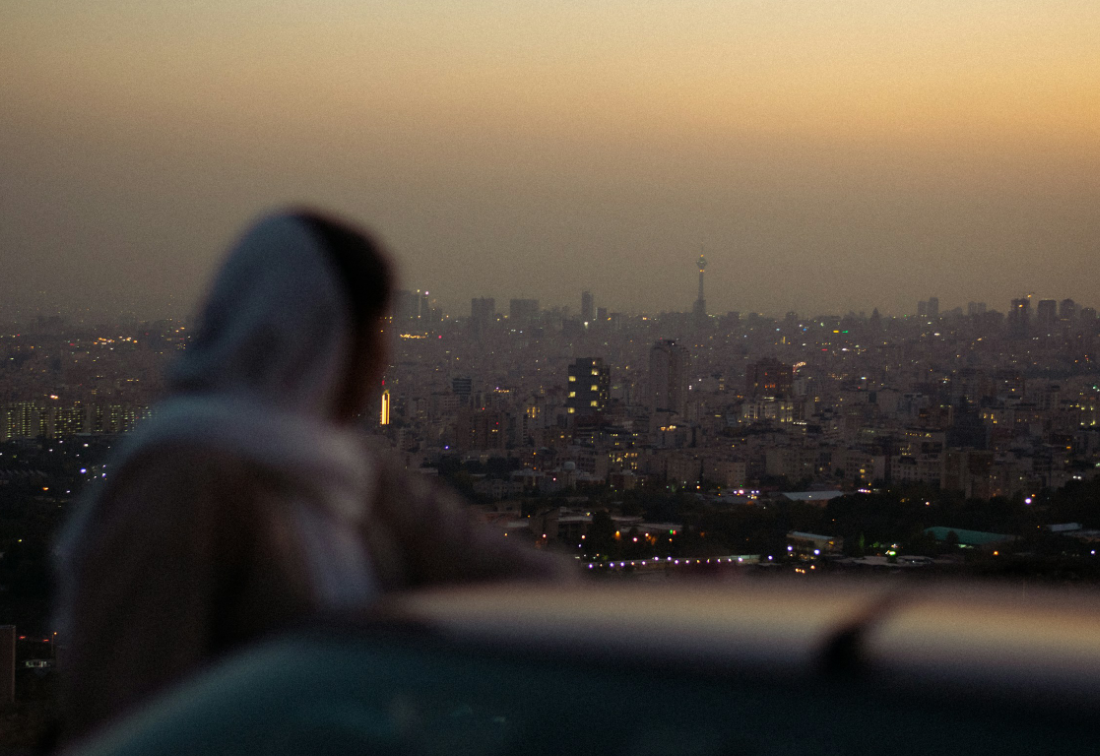
Photo by Seyed Amir Mohammad Tabatabaee on Unsplash.