
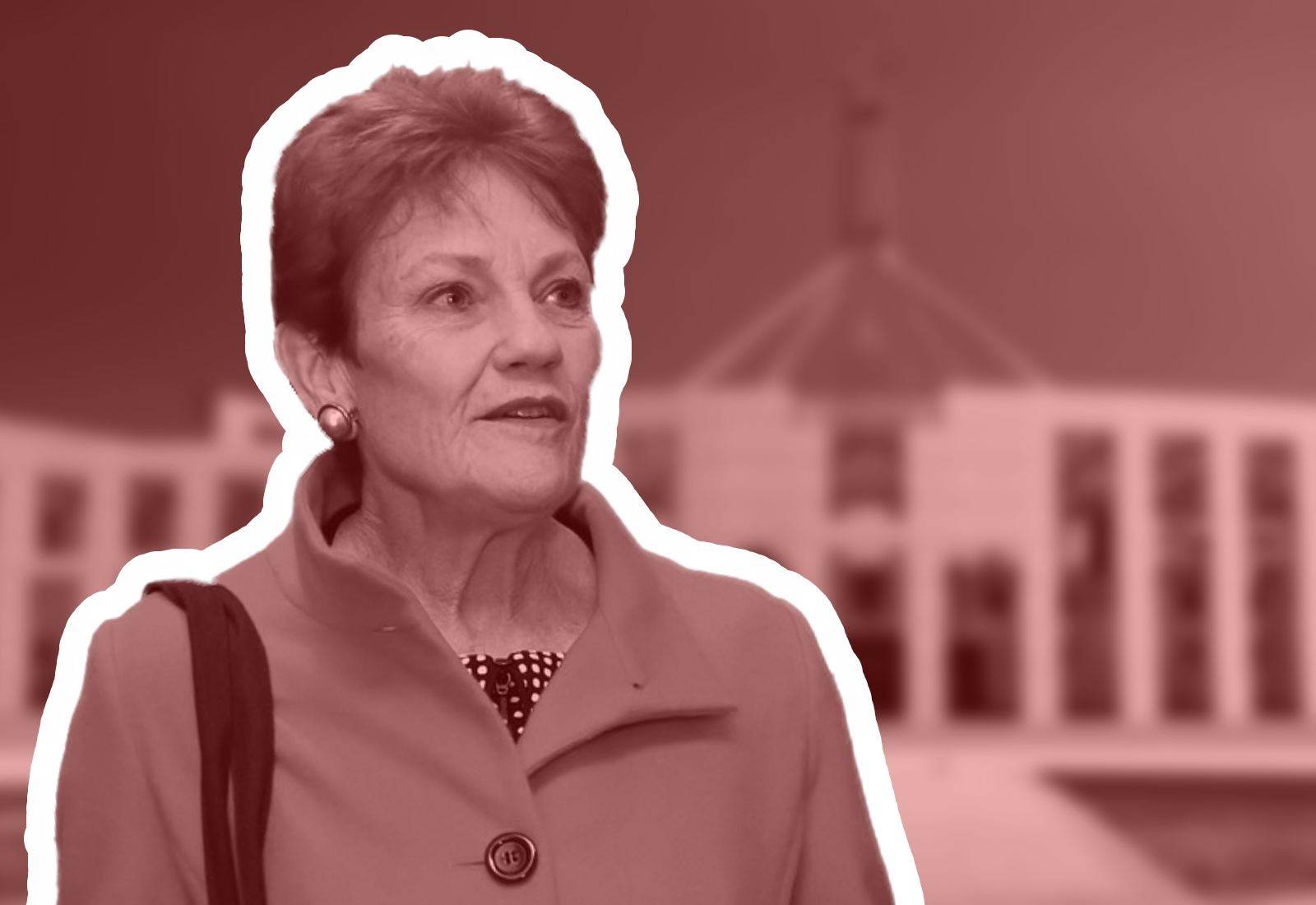
Not even a stunt orchestrated by activist group GetUp! could derail One Nation leader Pauline Hanson’s first appearance at the National Press Club in 30 years.
While Hanson’s 1996 maiden speech was a blunt declaration of an angry political outsider, calling for an end to immigration, multiculturalism and what she characterised as Indigenous privilege, her recent address did little to lend credence to the notion that she has developed a fresh political vision.
In June, Hanson instead presented a barely rough-hewn performance of a seasoned political insurgent, three decades into refining the same formulaic populist rhetoric – rhetoric including her most enduring policy position – to reject multiculturalism because, apparently, the nation has lost its identity and national values.
It didn’t take long for Greens leader Larissa Waters to describe Hanson’s speech as:
An incoherent hatred offering nothing more than the same tired Islamophobia, transphobia, racism and protection racket for fossil fuels we’ve heard from her for decades.
Hanson is far from being the first Australian political leader to lean on divisive and nationalist rhetoric. Challenging multiculturism as a political project has been increasingly framed in terms of its compatibility with national identity, social cohesion, social change and even the role of government.
Australia’s first prime minister, Edmund Barton, argued that racial equality did not exist and that some races were “unequal and inferior” compared with white races. Thus, the White Australia policy remained a defining feature of Australian immigration policy for more than seven decades, from Federation in 1901 until its formal abolition in 1973.
But contemporary politics is notably not immune to the challenges posed by populist ideals, which are often driven by national identity and resistance to social change, often with only superficial regard when they reduce complex political and social problems to simple explanations and emotionally appealing solutions.
John Howard connected Tampa and the ‘‘children overboard’ controversy, crystallising his approach to immigration, border protection, and national sovereignty in his 2001 “We will decide” speech.
Julia Gillard’s 2012 ‘misogyny speech’ demonstrated a highly confrontational form of parliamentary rhetoric, using repetition, personal attack and moral indignation to challenge both Tony Abbott and the broader culture of sexism in Australian political life.
But where Barton’s typical appeal centred on bringing Australian colonies together and presenting Federation as a part of creating a united Australian nation, Hanson’s proclivity is to position Australians against each other and against political elites and perceived outsiders.
Where Howard pursued a conservative, pragmatic and at-times populist rhetorical style, Hanson appears intent on portraying herself as a more confrontational, grievance-based populist.
Where Gillard’s relationship with the establishment was to work with and through them, Hanson constructs a sharp anti-establishment, frequently presenting ordinary Australians as being ignored or disadvantaged by groups portrayed as receiving preferential treatment.
Hanson and others mistake the rise or prevalence of multiculturalism as new phenomenon. It’s not. Societies have been culturally and ethnically diverse throughout history due to migration, conquest, trade, and the movement of peoples.
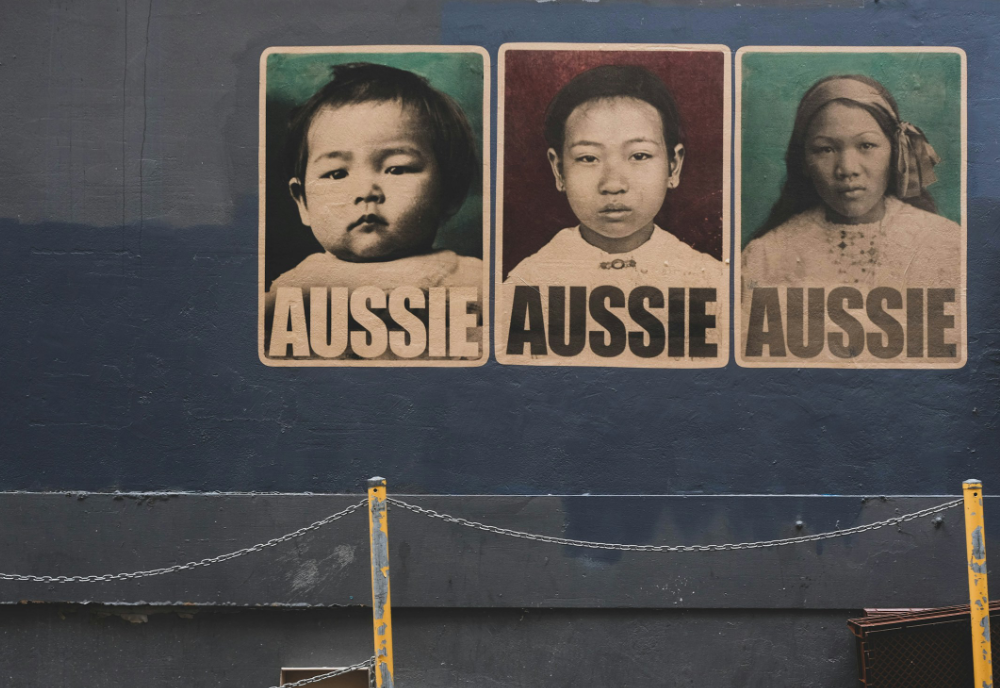
Cultural diversity has been a defining feature of Australian society – and long before Federation. Australia has been home to significant ethnic and cultural diversity, most fundamentally represented by First Nations peoples, who had maintained hundreds of distinct cultures, languages, and traditions across the continent for tens of thousands of years.
During the 19th century, Australia received migrants from Britain, Ireland, China, Germany, Italy, the Pacific Islands and elsewhere. The Chinese gold rush migration in the 1850s created substantial Chinese communities, particularly in Victoria and New South Wales.
Hanson has vowed to shut down multicultural broadcaster SBS and make the ABC subscription-only in capital cities. She also promised to shut down government departments including “the climate change department” and the “Aboriginal department [sic].”
I assume she meant the ‘Department of Climate Change, Energy, the Environment and Water’ and the ‘National Indigenous Australians Agency’.
She also said that more than “1,375 people per day were being brought into Australia”. The figure, in fact, represents the total population growth, with net overseas migration and counts in natural increase from births.
She cited a statistic that 35 oer cent of parents said their children had gone to school hungry. The actual figure came from a sample of about 4,400 people who had sought assistance from the Salvation Army’s emergency services.
But, as they say, why let facts get in the way of a good story.
Why quote accurate details when details only create uncertainty, when emotion can matter more than precision, when populism relies on clear divisions, when details undermine a simple narrative, when repetition reinforces a claim even after it has been fact-checked, or when supporters value the broader message over factual precision?
US President Donald Trump’s speeches are frequently littered with factual errors, exaggerations and claims that have been repeatedly debunked. Yet, factual inaccuracy has done little to diminish his political effectiveness.
Part of Trump’s success lies in the fact that his rhetoric is not primarily designed to provide a detailed account of policy; it is designed to provoke, persuade and reinforce a political narrative.
Similarly, British Right-wing populist politician Nigel Farage demonstrates the same paradox seen in much of contemporary populist politics: factual errors need not diminish political effectiveness.
In February 2026, Farage claimed that one million people in Britain could not speak English at all. Full Fact found that this was not correct, according to the 2021 Census, which appears to have been the source he was referring to. The Census data does not support the claim in that form.
And, so, why is One Nation’s primary support sitting at 26 per cent, ahead of the Australian Labor Party and the Liberal-National coalition?
The short answer is: Hanson’s popularity is thought to be driven by deep-seated cost-of-living and housing anxieties, as well as a consistent, long-standing focus on restrictive immigration policies.
One Nation’s appeal shares deep structural and stylistic similarities with Trump and Farage. Hanson’s movement personifies Australia’s local version of the same Right-wing populist phenomenon seen in the United States, the United Kingdom, and elsewhere.
Hanson and others mistake the rise or prevalence of multiculturalism as new phenomenon. It’s not.
Dutch political scientist Catherine E. de Vries and prominent Danish political scientist and professor at the London School of Economics Sara B. Hobolt argue that populist parties can be understood as “challenger parties”, and they describe them as political entrepreneurs who seek to disrupt the dominance of mainstream parties.
These people identify grievances or attitudes that exist among a minority of voters, amplify them, and push them into mainstream political debate.
Evidence suggests Australian grievances aren’t simply “people are becoming more racist” or “people are becoming anti-immigration”. Australians are increasingly concerned with cost-of-living pressure, housing affordability, immigration levels, declining sense of economic security, and concern about social change.
Perhaps what is less obvious is that Australians are increasingly dissatisfied with the major parties. And, importantly, there is a deeper crisis of confidence emerging in the political system itself.
After decades on the political fringes, One Nation has emerged as a serious electoral force, capitalising on these factors and other growing anxieties.
Over the last 25 years, technological and cultural changes have profoundly transformed politics.
Together, these forces have driven deeper divisions through society and, consequently, through politics itself. We have become a more fractured and divided society, with far less consensus around the shared values that once helped define our national identity. Should Hanson frame her views in this light, she may well be afforded a slight veneer of legitimacy.
Political discourse is now conducted in real time, accelerated by social media, the internet and, increasingly, artificial intelligence. This has placed politicians under unprecedented pressure to respond instantly while contributing to the erosion of public trust.
The result is a more fragmented political landscape, characterised by a fractured society, heightened polarisation and increasingly entrenched divisions, while more people are questioning the value and effectiveness of politics, creating a striking tension at the heart of contemporary democracy.

Perhaps the great paradox of contemporary Australia is that we have become more progressive in some respects while, simultaneously, becoming more conservative in others. Rather than moving neatly in one ideological direction, society has become increasingly complex, contradictory and politically divided.
There is a stronger commitment to the centre-Left on a range of progressive issues, yet this has been accompanied by a renewed conservative movement and a revival of conservative ideology.
These competing currents have created significant tensions within Australian politics, most notably within the coalition, which has become increasingly divided over what conservatism should mean in contemporary Australia.
As a result, governing and governance has become more difficult. Governments face greater challenges in identifying and pursuing policies in the national interest, as the extent of political polarisation makes the consensus necessary for meaningful reform increasingly difficult to achieve.
Published 3 September 2026.
If you wish to republish this original article, please attribute to Rationale. Click here to find out more about republishing under Creative Commons.
Image: US Embassy Australia (Flickr, CC); Shutterstock.