
Imagine you are face to face with a person you know is very angry. He strikes you. What would you do? If you were a Yup’ik person (a native of Central Southwest Alaska), following the wisdom of your elders you would probably turn and walk away. When everyone has calmed down you might enter into a discussion with the other person about what happened.
The Yup’ik language, Yugtun, does not emphasise the individual. Instead, the bonds of community are more important. This is not surprising when you live in one of the most remote and harshest places on Earth.
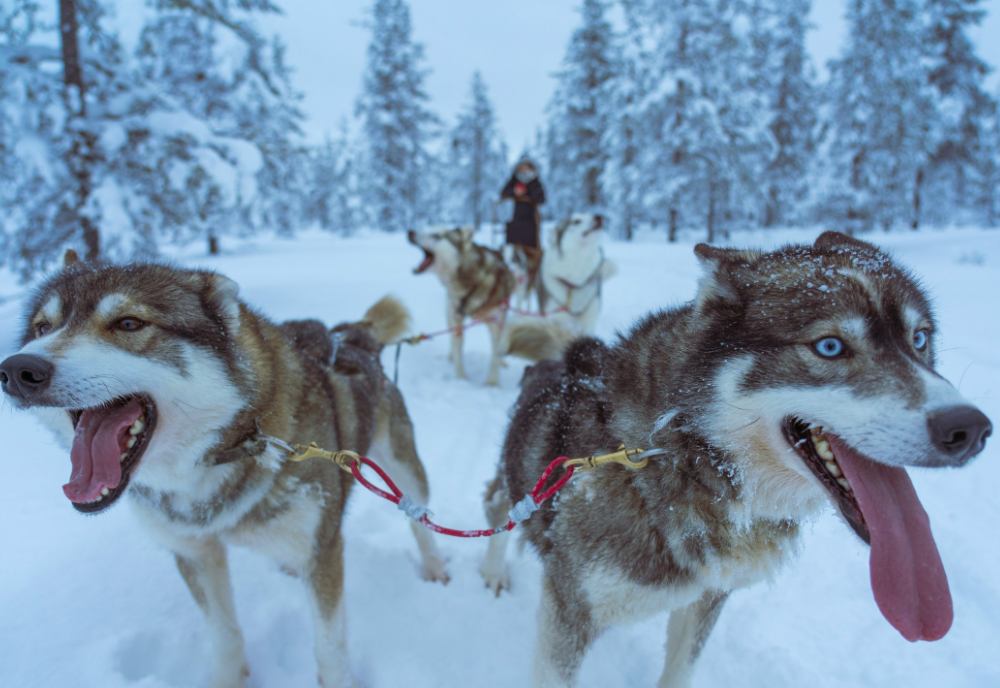
In the small villages of the tundra, you need to depend on each other to survive. You rely a great deal on what the land, river and sea can provide. Travel is either by plane, snowmobile, dog sled, or, when the great meandering Kuskokwim River is not frozen solid, by boat. Hunting is dangerous and the environment is tough.
As Yup’ik elder Lawrence Edmund declared:
Our language isn’t something that we should lose since it was given to us to use. Our language is good since people don’t speak of bad things when they speak in Yup’ik. But now that they’re starting to speak in English, they also speak of things that aren’t good to hear. Our language is something that we mustn’t lose because it will help our young people. Our language is dependent on the land. And these [places] have names in Yup’ik.
For around 300,000 years, modern humans lived in small groups of hunter-gatherers, foragers and scavengers. They were often nomadic, subsisting on whatever was available.
A characteristic of many hunter-gatherer and subsistence-living societies is that people have great attachment to the land, not a sense of possession, but in guardianship. They tend to see themselves as living in harmony with other animals and plants, and all that makes up their world, rather than seeing themselves as masters of all they survey.
It is not surprising that these sort of societies tend to be more egalitarian. The only way to survive in these types of environments is for all to work together for the common good. Of necessity, they cooperate and support each other.
Today, there a few such people in the world. Modern hunter-gatherers, such as the Hadza of Tanzania or the Baka of the Congo, view the world not as a resource to be dominated but as a living, interconnected web of relationships. They see humans as equal participants in an ecosystem, emphasising deep reciprocity, shared abundance, and a profound respect for the natural rhythms of life.
In a discussion paper The land is our future: Caring of country, a member of the Victorian Aboriginal Heritage Council states that:
Cultural Heritage is the legacy we inherited from our Ancestors. And it includes responsibilities to protect both the physical aspects – land, water, flora, fauna and today, archaeology; and the intangible aspects – our story, language, mythology and lore. Our Ancestors understood that caring for Country allowed Country to care for them.
Likewise, the Yup’ik people have a similar philosophy. A diagram of their traditional world view shows how all aspects of their lives – the natural, spiritual, cultural and human – are interrelated and equally important.
Unfortunately, Indigenous people around the world have been treated appallingly by those with something to gain from exploiting the resources of their land.
One issue that has been publicised recently is the forced dispossession of the Maasai of Ngorongoro, in Tanzania. Originally, they were relocated from the Serengeti when it became a park. Now, they are being evicted from lands they were told would be their permanent home. It seems that one of the uses intended for this area is a place for wealthy people to hunt elephants.
Like other atheists, I do not believe in an after-life, or a life before birth, or in any supernatural or ‘other’ world. But I do believe there is much we can learn from Indigenous people about how we can live in this world in harmony, and how we can treat all living things with respect, develop deep knowledge of our world, and act as custodians of the Earth.
I share the views of the Rationalist Society of Australia and others that:
The natural world is the only world there is and that the life we live in this natural world is the only life we have and that world is inherently precious not just for us but for all living things. It also means that as humans, we derive our values and ethics from the natural world – from our need to live together and to try to improve the well-being of all around us.
Published on 24 July 2026.
If you wish to republish this original article, please attribute to Rationale. Click here to find out more about republishing under Creative Commons.
Photo by Ugur Arpaci on Unsplash.