

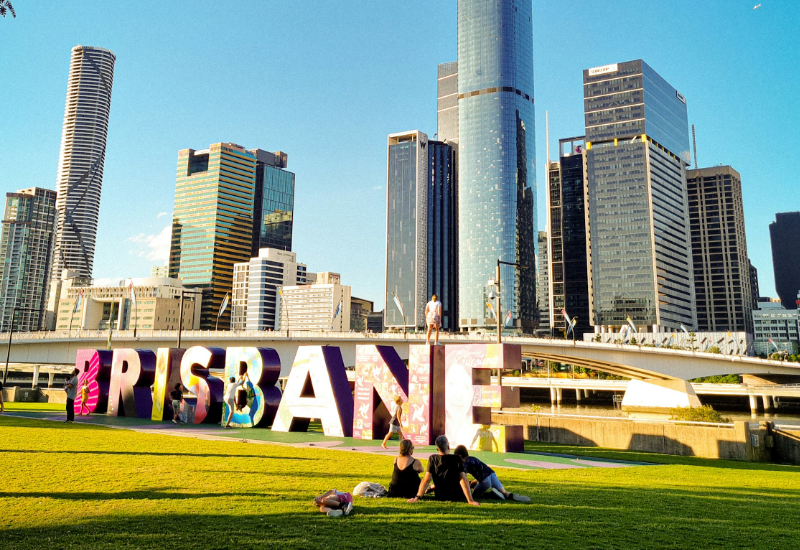
Editor’s note: If you would like to submit a letter for possible publication, please email it to editor@rationalist.com.au. See our Publishing Guideline As Brisbane moves into the six-year lead-up to the 2032 Olympics, public attention has focused on stadiums, transport corridors and urban redevelopment. Yet, the more consequential opportunity lies not in infrastructure but in behaviour — how people travel through the city in their daily lives. Mega events create rare policy windows in which governments can trial reforms that would otherwise be politically difficult. The critical question is timing. Should policies be introduced years in advance, shortly before the event, or after it concludes? A considered reading of past experience suggests that early, deliberate experimentation offers the greatest chance of lasting change. Australia’s urban form presents structural constraints. Cities such as Brisbane, Sydney and Melbourne are defined by suburban sprawl, dispersed employment and complex travel patterns. For many households, car use is not simply a preference but a necessity, shaped by school drop-offs, shopping logistics and multi-stop commuting. Infrastructure investment alone – as seen in the lead-up to the Sydney 2000 Olympics – does not reliably shift this dependence. This makes behavioural incentives critical. Brisbane’s recent low-cost public transport fares provide a striking example. By removing price as a barrier, such policies encourage residents to expe...
Blog
Related Posts

06
Mar
Government’s pandering to religion ‘fills me with horror’
Editor’s note: If you would like to submit a letter for possible publication, please email it to editor@rationalist.com.au. See our ...

07
Feb
Being child-free is not selfish
Editor’s note: If you would like to submit a letter for possible publication, please email it to editor@rationalist.com.au. See our ...

09
Jan
Taking issue with the Catholic archbishop’s heartless, offensive ‘kill teams’ comments
Editor’s note: If you would like to submit a letter for possible publication, please email it to editor@rationalist.com.au. See our ...

02
Dec
What motivated the ‘cruel’ assisted dying bill?
Editor’s note: If you would like to submit a letter for possible publication, please email it to editor@rationalist.com.au. See our ...
02
Nov
Leftism, a ‘mental illness’? Oh, Right!
Editor’s note: If you would like to submit a letter for possible publication, please email it to editor@rationalist.com.au. See our ...
07
Oct
A bridge to peace
Editor’s note: If you would like to submit a letter for possible publication, please email it to editor@rationalist.com.au. See our ...

03
Oct
The world “does have intelligent design”, says Andrew Hastie

Ten years ago, during his first political campaign, Andrew Hastie refused to answer media questions about his religious views an...

25
Aug
Criticising Israel is not ‘antisemitic’
Editor’s note: If you would like to submit a letter for possible publication, please email it to editor@rationalist.com.au. See our ...

24
Jul
End the government funding of faith workers
Editor’s note: If you would like to submit a letter for possible publication, please email it to editor@rationalist.com.au. See our ...

10
Jun
‘Heritage’ is no argument against change on parliamentary prayers
Editor’s note: If you would like to submit a letter for possible publication, please email it to editor@rationalist.com.au. See our ...
12
May
Will the Coalition ever learn to stop imposing religion on the public?
Editor’s note: If you would like to submit a letter for possible publication, please email it to editor@rationalist.com.au. See our ...

31
Mar
Support for scripture program highlights bias of politicians
Editor’s note: If you would like to submit a letter for possible publication, please email it to editor@rationalist.com.au. See our ...